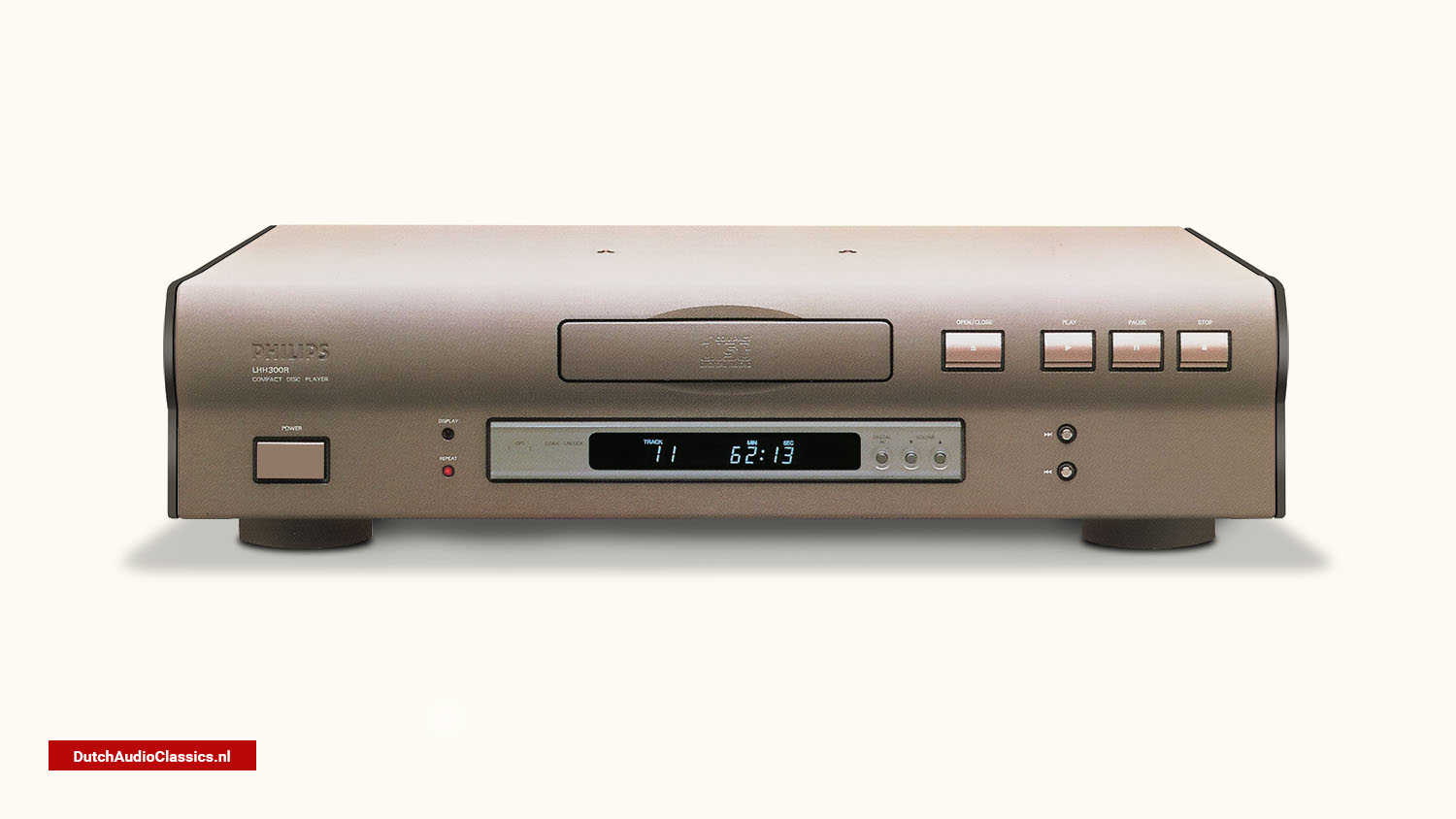
The Philips LHH300R was not the most expensive CD player in the late Philips Reference line. It was not the rarest either. Yet its importance lies precisely there. Introduced in Japan in November 1995, it translated much of the thinking behind the limited LHH900R into a more accessible high-end machine. In doing so, it became one of the clearest examples of Philips and Marantz Japan’s late answer to a difficult question: how could compact disc playback become not only accurate, but natural?
Philips LHH300RThe accessible expression of the LHH900R philosophy
April 28, 2026
The Philips LHH300R has a special place in the Philips LHH series. It was introduced in Japan in 1995 and was placed below the rare and expensive LHH900R. Still, it used many of the same ideas. That makes the LHH300R more than a smaller model. It shows how Philips and Marantz Japan brought their top design thinking to a more accessible high-end CD player.
This blog looks at why the LHH300R is such an interesting machine. It covers the DAC7/DF7 Bitstream design, the CDM-9 swing-arm transport, the Non-NFB analog stage, the balanced outputs and the copper-plated chassis. Together, these choices show a clear goal: to make CD playback sound more natural by reducing noise, vibration and unnecessary correction.
By the mid-1990s, the compact disc had already won the market. The early uncertainty around digital playback had largely disappeared. CD was practical, stable and quiet. It offered low noise, easy handling and a level of convenience that vinyl could not match. But among serious listeners, another discussion had taken shape. Digital sound was often admired for its precision, yet criticised for a certain hardness. It could sound clean and controlled, but also mechanical.
The later Philips LHH models were developed in that atmosphere. They did not reject digital technology. They tried to refine it. The LHH300R belongs to this final and highly interesting phase of Philips high-end CD design, where conversion technology, analogue circuitry, power supply behaviour and mechanical construction were treated as parts of one complete system.
A Japanese-market Reference model
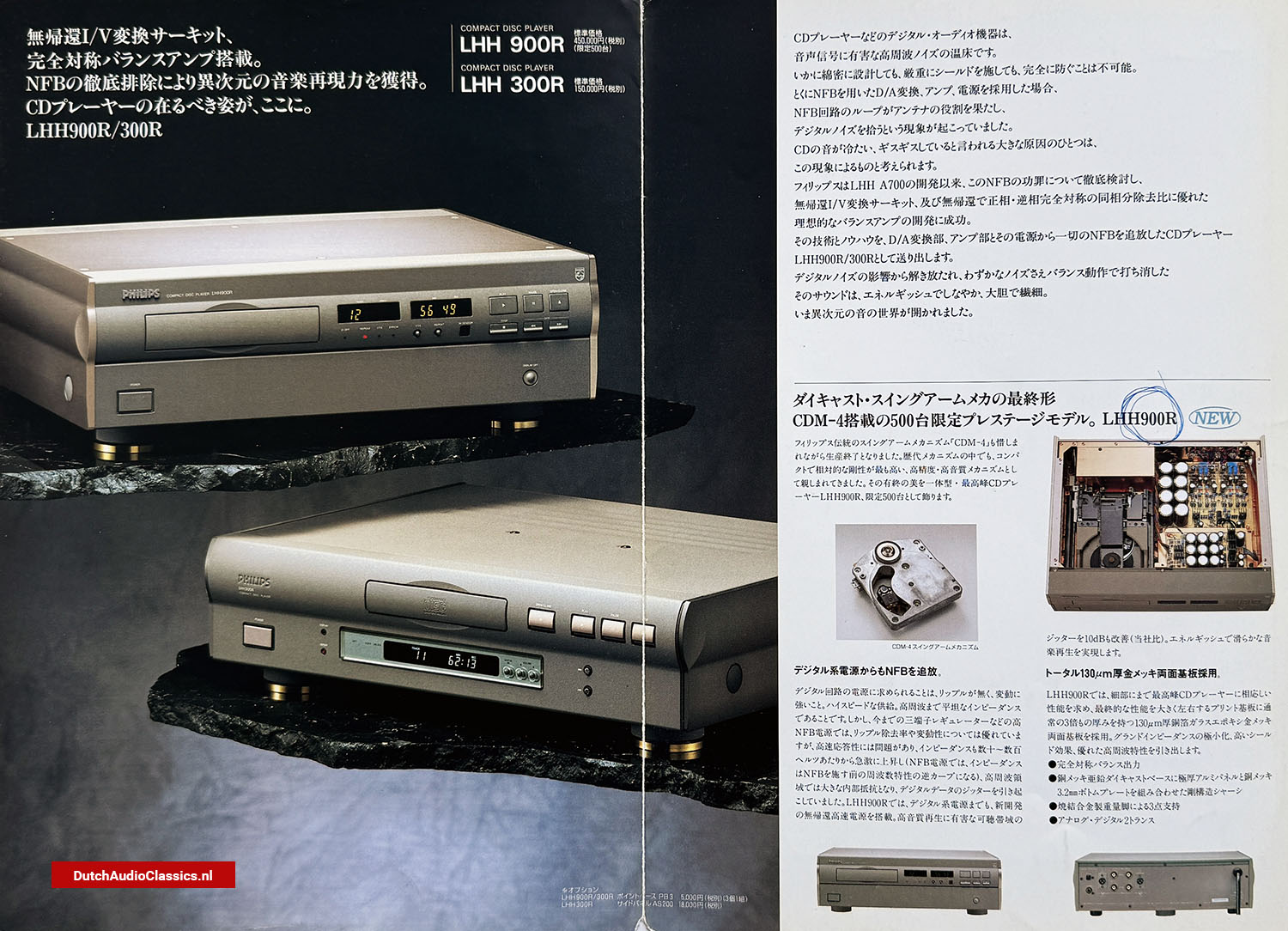
The LHH300R was designed for the Japanese market and carried an original price of 150,000 yen, excluding tax. Within the LHH Reference series, this placed it above the more modest LHH200R and LHH200RX, but far below the exclusive LHH900R, which was priced at 450,000 yen and produced in limited numbers.
This position is essential to understanding the player. The LHH300R was not an entry-level machine. It was also not a cost-no-object statement. It was a bridge model. It brought the central ideas of the LHH900R into a product that a wider group of serious enthusiasts could realistically consider.
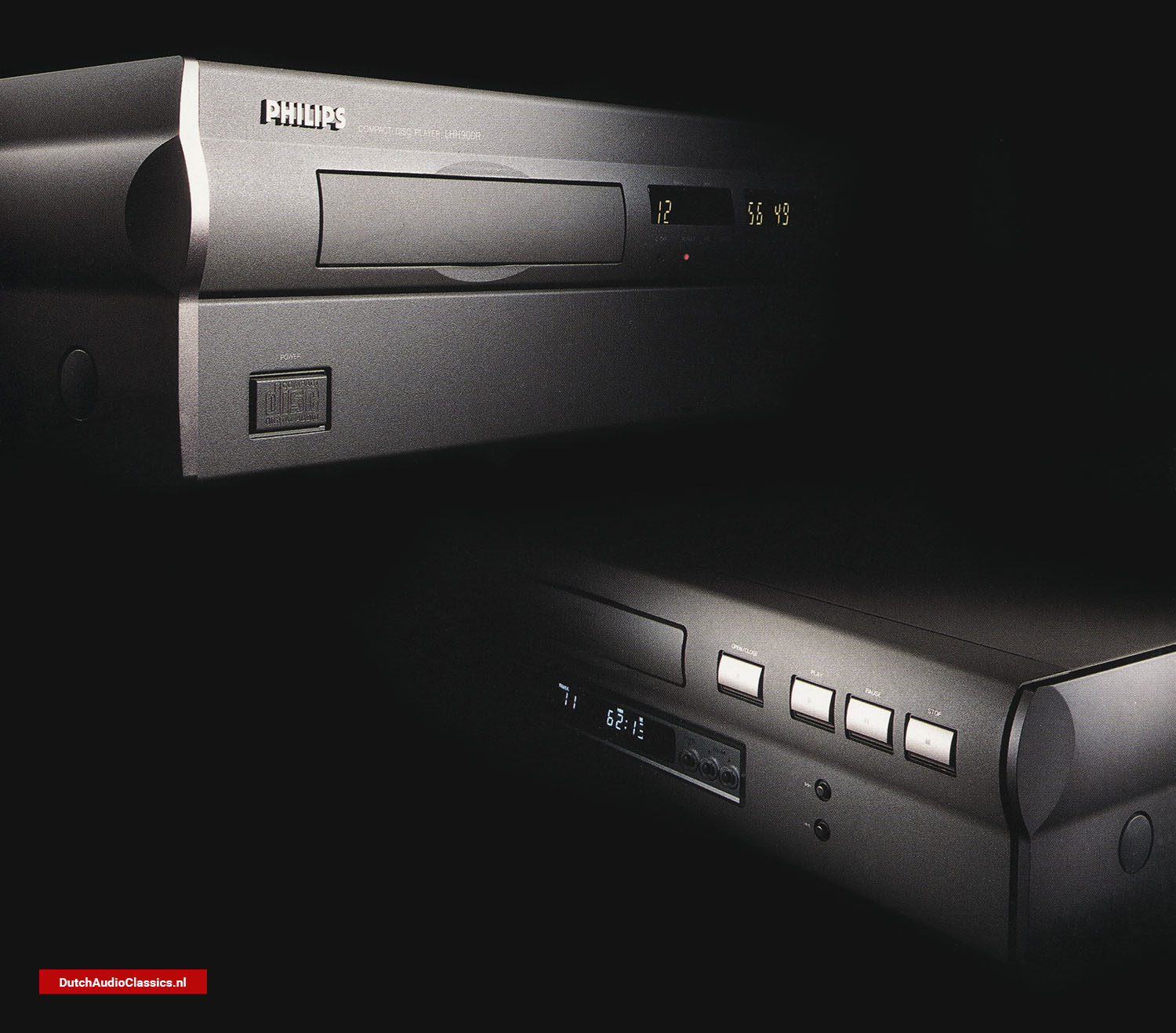
The LHH name already carried weight. Earlier models such as the Philips LHH2000 and Philips LHH1000 had established Philips as a serious force in professional and high-end CD replay. Those machines belonged to the first great period of Philips digital audio. They were heavy, technically ambitious and closely tied to the company’s early authority in compact disc technology.
The LHH300R came from another moment. It no longer looked back to the first generation of multi-bit conversion as the only high-end route. Instead, it represented Philips’ mature Bitstream philosophy, shaped further by the Japanese engineering culture around Marantz. Its name connected it to the original LHH300 of 1990 and the LHH300B of 1992, but internally it was far more than a revision. Its architecture and intent belonged to the same design world as the LHH900R.
After the bit race
In the early 1990s, much of the CD player market was caught up in a race of numbers. Manufacturers promoted 18-bit, 20-bit and even higher-bit conversion. The message was easy to understand: more bits must mean better sound.
Philips took another path. The company had already created some of the most respected multi-bit DACs, including the TDA1541 family. These converters remain highly regarded, but multi-bit conversion also carried a technical challenge. It depended on extremely accurate internal resistor networks. Small deviations could affect linearity, especially at very low signal levels and around the zero crossing point of the waveform.
Bitstream conversion approached the problem differently. Instead of converting many weighted bits at once, it transformed the signal into a very fast 1-bit data stream. In principle, this avoided some of the precision problems that came with multi-bit resistor ladders. It also made converter behaviour more consistent in production.
At first, Bitstream was sometimes seen as a practical or cost-driven technology. In the LHH300R, that interpretation no longer applies. Here, Philips used Bitstream as a serious high-end solution. The player was built around the TDA1547, known as DAC7, combined with the TDA1307 DF7 digital filter and noise shaper. Together, these formed the core of Philips’ advanced Bitstream conversion architecture.
Philips DAC7/DF7 architecture
The digital heart of the LHH300R is this Philips DAC7/DF7 architecture. The signal from the CD mechanism is decoded by the SAA7310. External digital signals enter through the digital input section and are handled by the TDA1315 digital audio interface receiver. A selector then chooses between the internal CD signal and an external source.
From there, the signal passes to the TDA1307 DF7. This chip performs the main digital processing. It applies 8-times oversampling and advanced noise shaping before the signal reaches the converter itself.
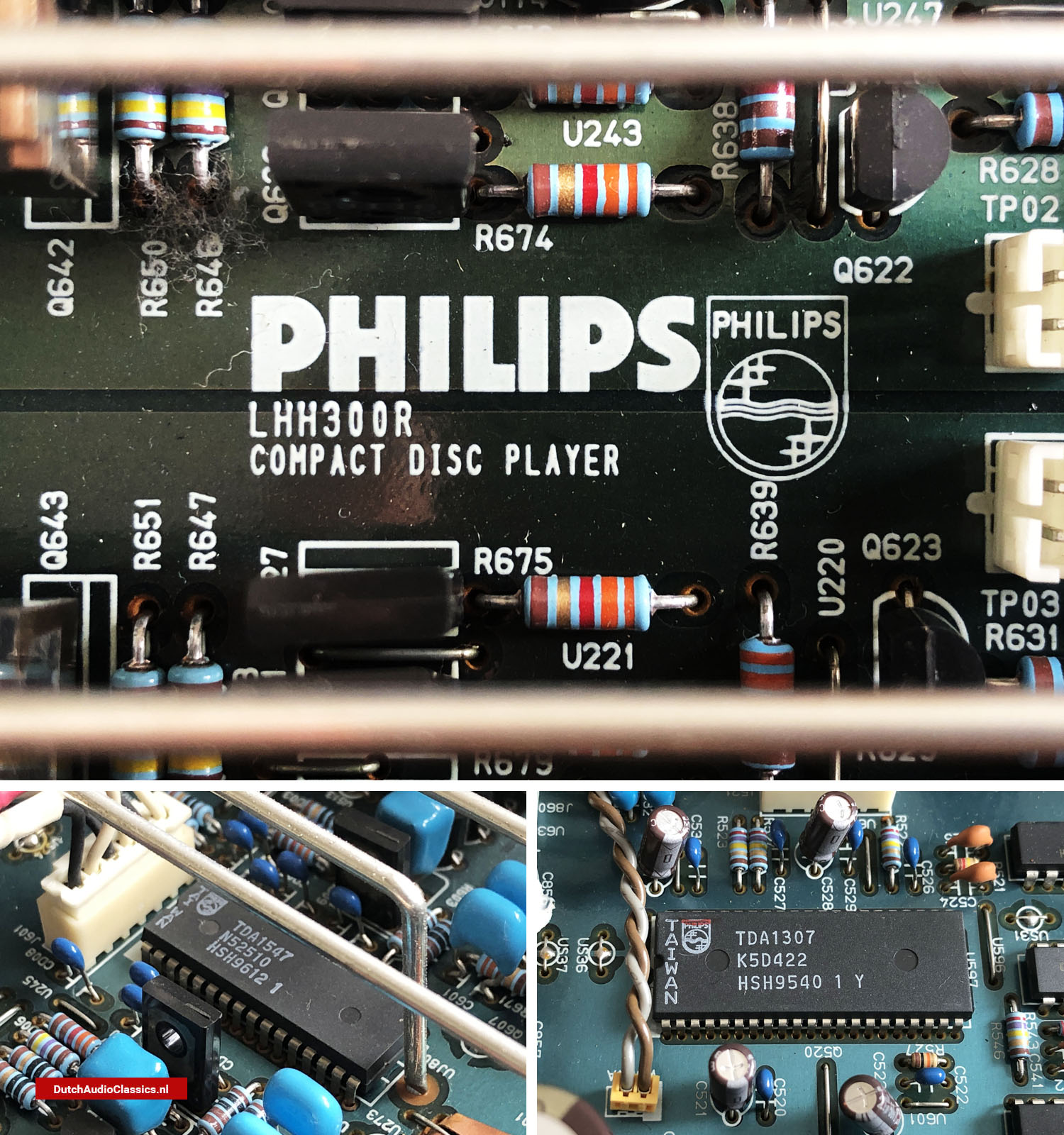
The actual D/A conversion is handled by the TDA1547 DAC7. This is a 1-bit switched-capacitor converter. One of the important ideas behind this architecture is separation. The heavy digital processing is not placed inside the DAC chip. The DF7 handles filtering and noise shaping, while the DAC7 can concentrate on conversion.
That separation matters in a CD player. Digital circuits switch rapidly. They create noise, clock activity and high-frequency energy. Sensitive analogue stages do not benefit from being close to that disturbance. By dividing the work between digital processing and conversion, Philips reduced the amount of digital activity near the most delicate point in the chain.
The LHH300R uses the DAC7 in single differential mode. This followed the direction already visible in the LHH800R. Some earlier high-end Philips and Marantz designs used more elaborate parallel or double differential converter arrangements. The later LHH philosophy moved in another direction. It favoured fewer stages, less complexity and a more direct signal path.
The Non-NFB principle
The most distinctive design concept in the LHH300R is Non-NFB, meaning no negative feedback.
Negative feedback is common in audio design. A portion of the output signal is returned to the input of a circuit to correct errors. Used well, it can reduce distortion and improve measured performance. In many designs, it is a useful and effective technique.
The engineers behind the LHH300R viewed the matter differently in the context of a CD player. Their concern was not only distortion. It was also the way feedback loops might behave in a machine filled with high-frequency digital activity. A feedback path can become a route through which unwanted noise re-enters the audio circuit. In this design philosophy, such behaviour was linked to the hard or cold character often associated with lesser digital players.
The LHH300R was designed to avoid that problem at the source. Its I/V conversion, analogue amplification and key power supply circuits were developed without negative feedback. This went further than the Low-NFB approach used in earlier models such as the LHH800R and LHH200R.
That choice made the design more demanding, not less. Without feedback, the circuit cannot rely on correction after the fact. Stability, bandwidth, noise behaviour and tonal balance have to be achieved by the circuit itself. Layout, grounding, shielding and component choice become critical. The LHH300R should therefore not be seen simply as a DAC7 player in a solid case. It is a complete design built around the idea that unwanted artefacts should be prevented before they enter the music signal.
A discrete balanced analogue stage
The analogue stage follows this logic closely. The LHH300R does not use conventional op-amps for its main analogue amplification. It also avoids using the internal active output functions of the DAC7. Instead, it employs a discrete analogue circuit with passive I/V conversion.
I/V conversion is the point where the current output of the DAC becomes a voltage signal. It is a sensitive stage, because small errors or noise at this point can affect everything that follows. In the LHH300R, the passive I/V stage also functions as a passive low-pass filter. This avoids adding an active amplifier at one of the most delicate locations in the signal path.
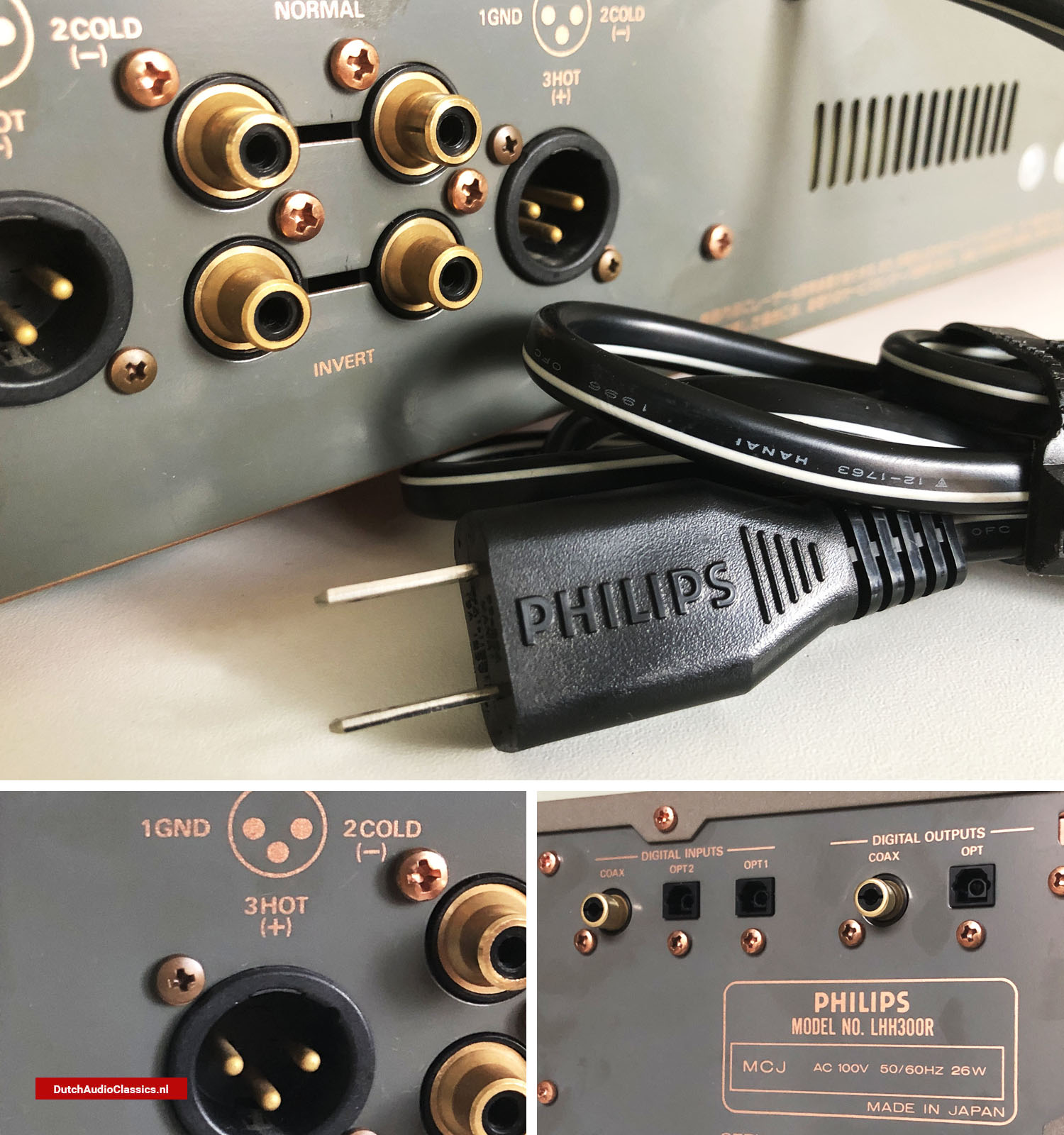
After this, the signal is handled by a fully symmetrical balanced circuit. The player offers balanced XLR outputs with a 5V RMS output level. RCA outputs are also provided, but Philips made an unusual choice here. Instead of a simple phase switch, the rear panel includes both normal phase and inverted phase RCA outputs.
The final output buffer uses a powerful single-ended push-pull stage with medium-power MOS-FET devices. Its role is not only to produce voltage. It must drive real interconnects and real amplifier inputs without losing energy or tonal stability. This helps explain why the LHH300R is often associated with a combination of scale, smoothness and drive. Its design aimed to preserve musical energy while avoiding the etched quality that the Non-NFB concept was intended to remove.
BTL connection and direct amplifier drive
The LHH300R also offers an unusual connection option for a CD player: BTL, or Bridged Transformer Less operation. This is made possible by its separate normal and inverted RCA outputs. For each channel, the player can send both an in-phase signal and an opposite-phase signal.
In a BTL setup, the normal and inverted outputs of one channel are connected to the two inputs of a stereo power amplifier. The two amplifier channels then work together to drive one loudspeaker. For stereo playback, two stereo power amplifiers are needed, each used as a bridged mono amplifier.
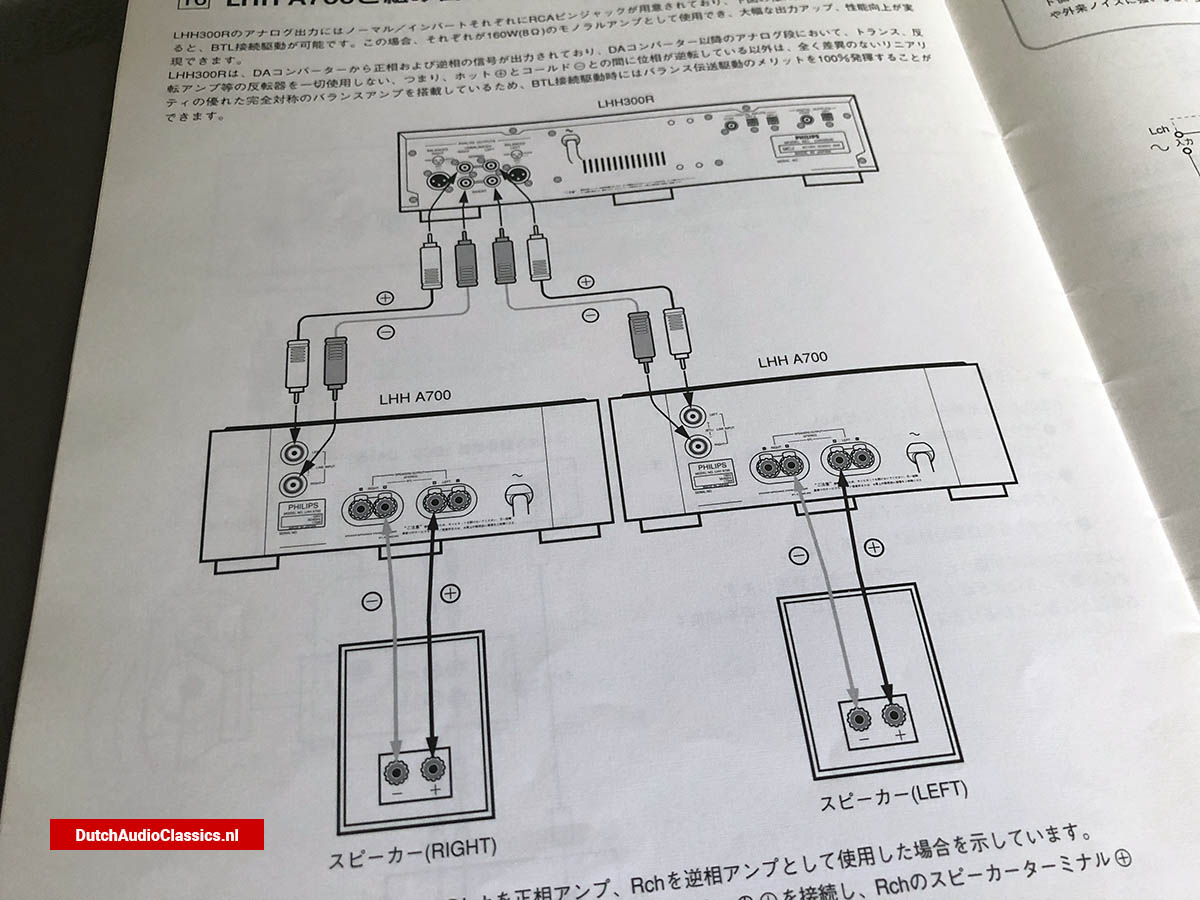
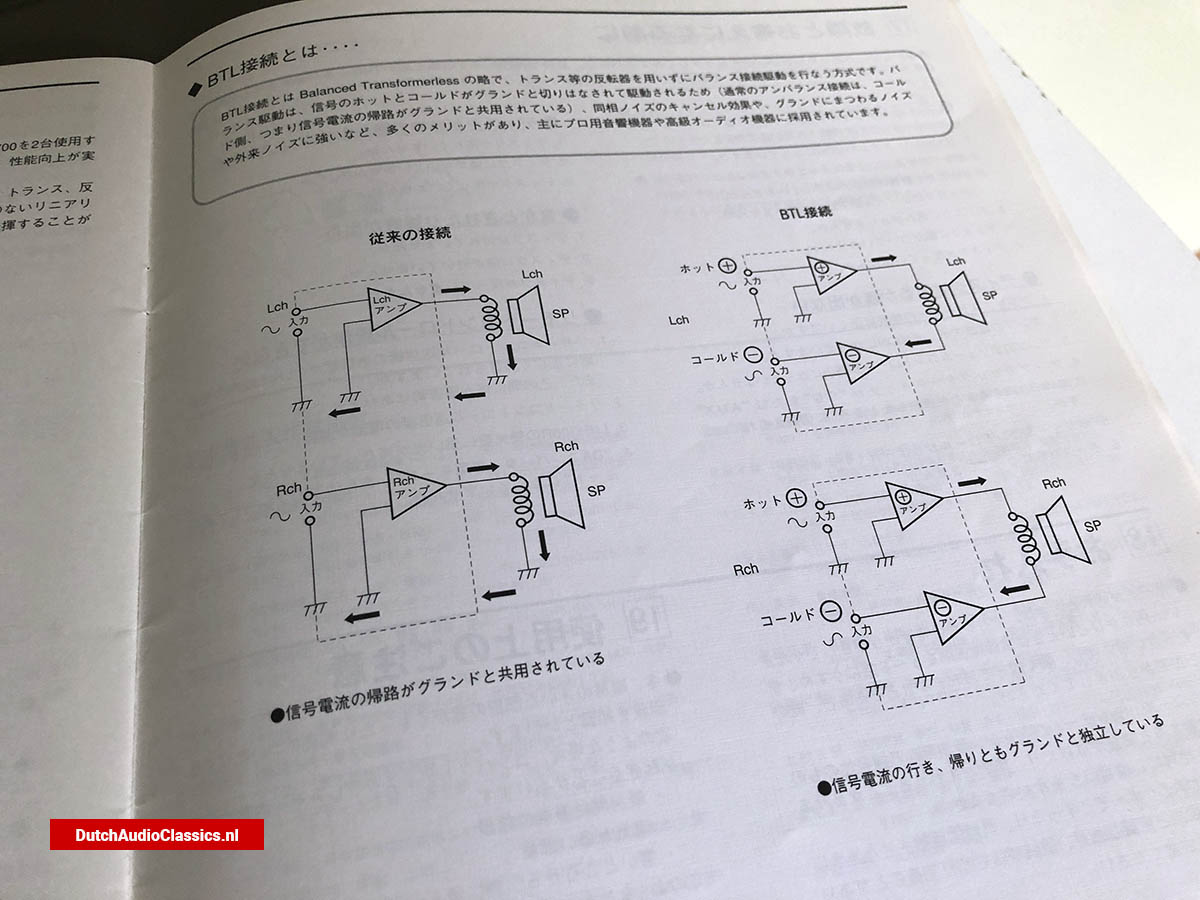
The aim is greater drive and better loudspeaker control. The special point in the LHH300R is that the inverted signal is created in the digital domain. In a conventional setup, phase inversion may happen later in the analogue chain, where it can introduce a very small time delay. In the LHH300R, the normal and inverted signals remain precisely aligned before D/A conversion.
Together with its digital volume control, this allowed the LHH300R to be connected directly to suitable power amplifiers, such as the Philips LHH A700. In this role, it became more than a CD player. It acted as the control centre of a very short and direct signal path.
Power supply as part of the sound
The Non-NFB idea was not limited to the audio signal path. It also shaped the power supply.
Many CD players use standard three-terminal regulators. They are compact, reliable and effective. But they normally rely on high levels of negative feedback. In the LHH300R, Philips avoided such regulators in key areas and used specially designed high-speed Non-NFB power supply circuits for the analogue and digital sections.
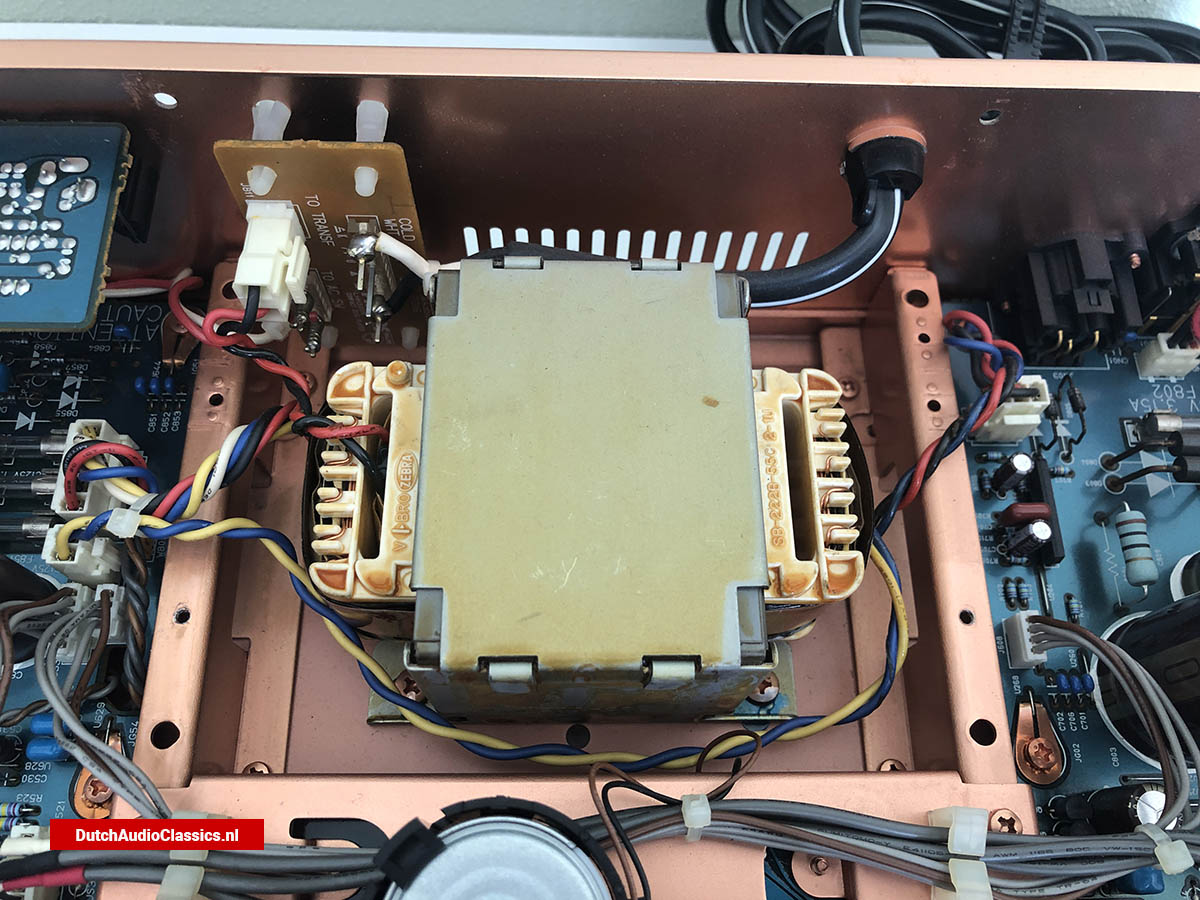
This was partly about noise. It was also about timing. According to the design theory behind the player, a conventional feedback-based regulator may become less responsive at very high frequencies. Its internal impedance can rise, and this may affect the stability of the circuits it feeds. In a digital audio player, power supply behaviour can influence clock stability and may contribute to jitter.
Whether one approaches this from measurement or from listening, the intention is clear. The power supply was not treated as background infrastructure. It was treated as an active part of the player’s sonic behaviour. This is typical of the late LHH approach. Each section was considered in relation to the whole.
The CDM-9 swing-arm transport
For disc reading, the LHH300R uses the Philips CDM-9 mechanism. This was one of the later developments of Philips’ single-beam swing-arm transport tradition.
By 1995, the large die-cast mechanisms of the early CD era, such as the CDM-1 and CDM-4, were no longer the obvious route for every high-end product. The CDM-9 was more compact, yet it retained the swing-arm principle associated with Philips transports. It was known for fast access, stable tracking and strong disc readability.
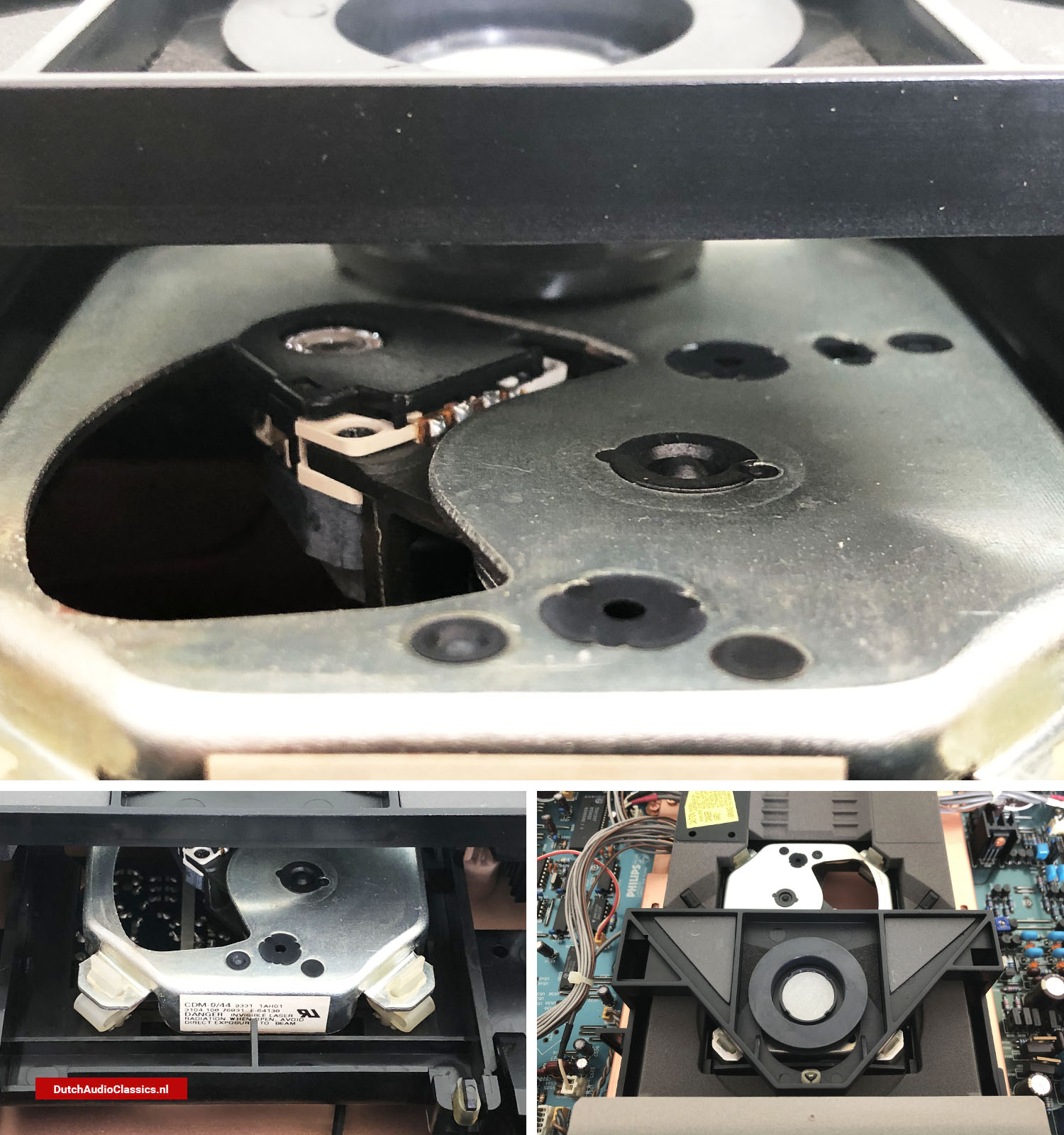
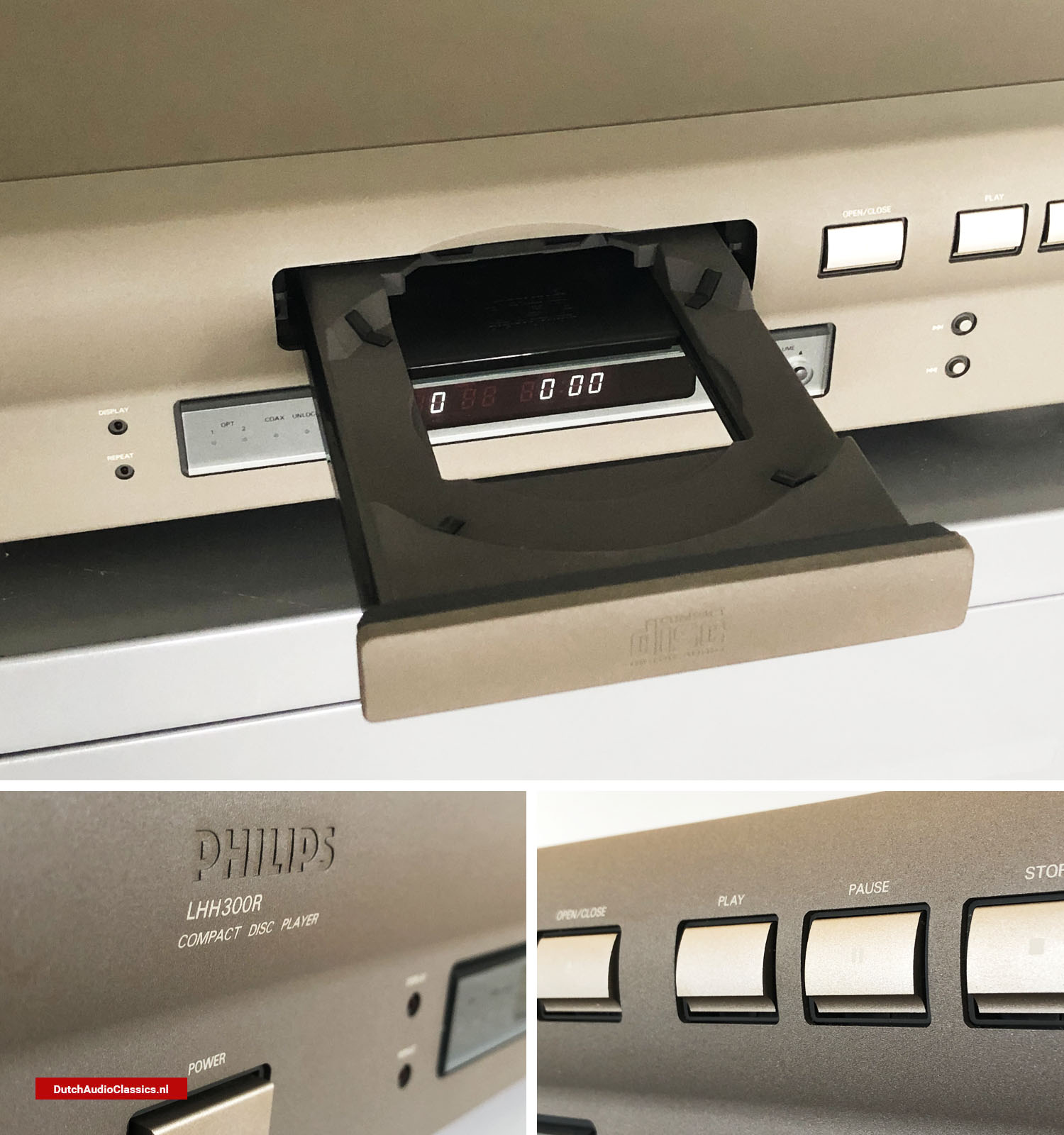
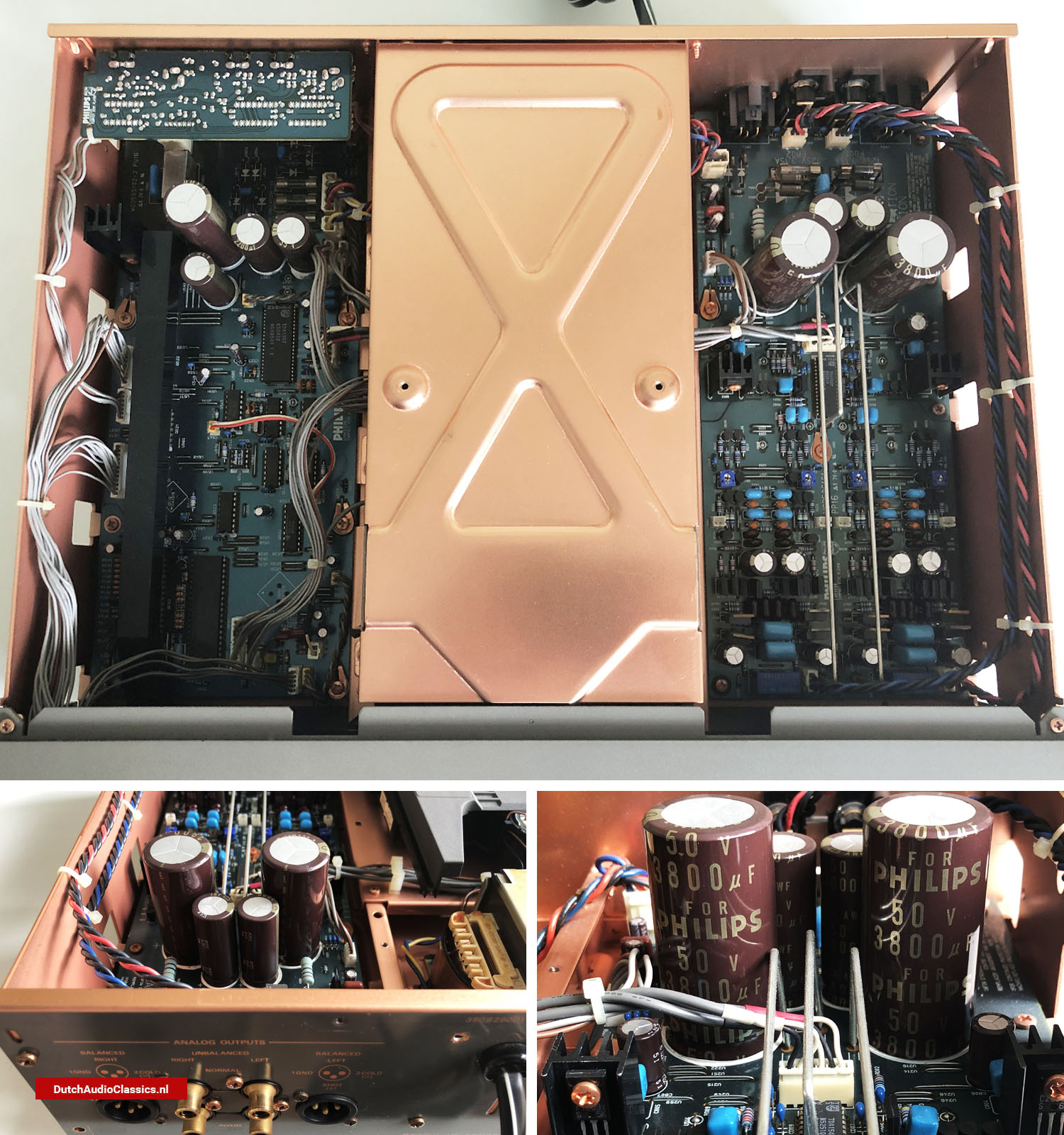
In the LHH300R, the transport is mounted centrally in the chassis. This is not only a neat visual arrangement. It supports weight distribution and works with the player’s 3-point mechanical grounding system. It also allows the digital, analogue and power supply sections to be arranged logically around the mechanism.
The transport sits inside a copper-plated steel structure. Even the cover above the mechanism is copper plated. This reflects a wider belief within the design. Mechanical stability, electrical shielding and sound quality were not separate matters. They were linked.
Copper, mass and grounding
The LHH300R is less massive than the LHH900R, but it remains a serious and carefully constructed machine. The base chassis is made from 2 mm steel and is fully copper plated. The top cover is 1.6 mm thick. The complete player weighs around 11.8 kg.
Copper plating helps shield internal circuits from high-frequency interference. In a feedback-free design, this becomes especially important. If the circuit is not relying on correction loops, then noise must be controlled through prevention. Shielding, grounding and physical layout become part of the audio architecture.
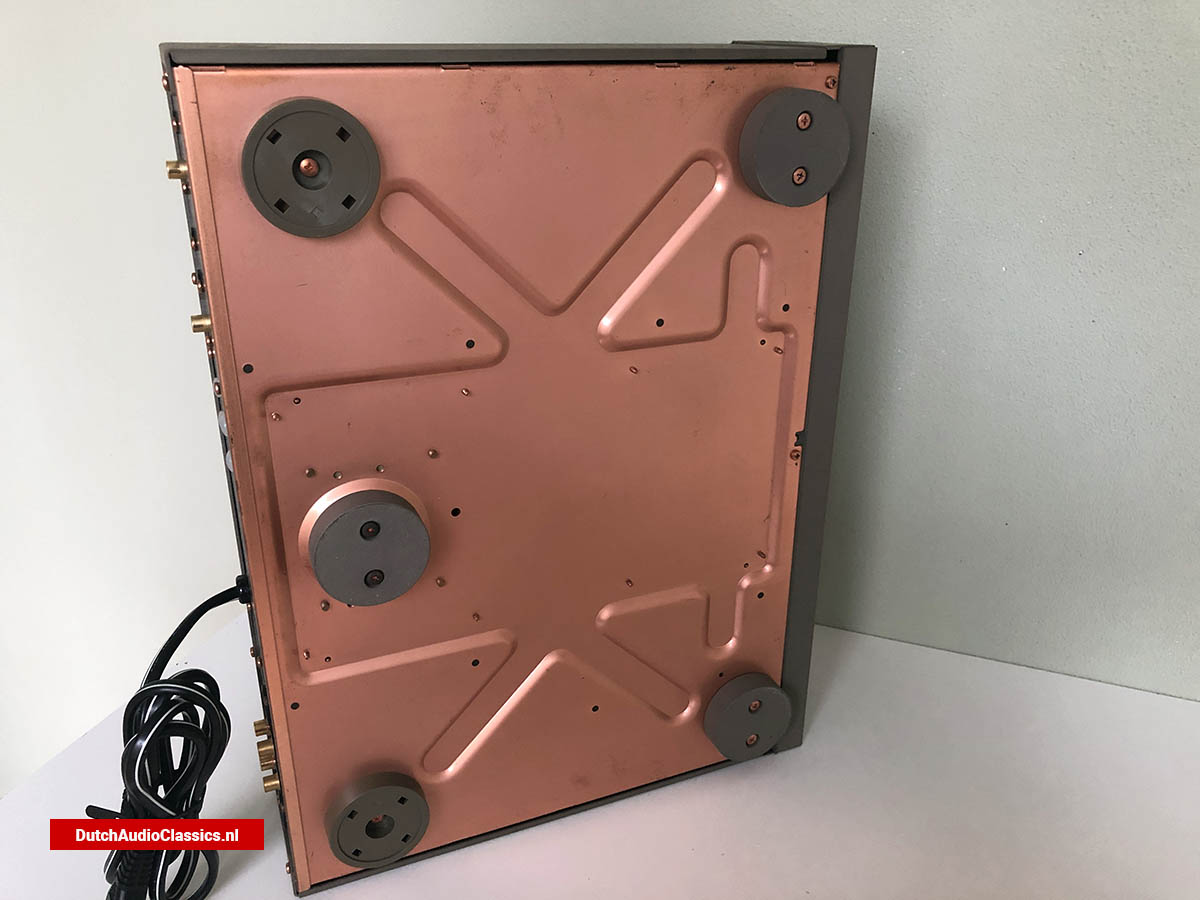
The printed circuit boards use double-sided copper foil glass-epoxy material, helping to reduce ground impedance and improve shielding. The player also stands on three heavy feet made from a sintered alloy. A 3-point support system has a practical advantage: three points define a stable plane. The chassis can sit firmly without rocking, even if the surface below is not perfectly even.
This construction shows how Philips and Marantz Japan understood a CD player. It was not only an electronic device. It was also a mechanical system. The disc, laser, motor, transformer, chassis and boards all interact. Reducing vibration and interference at the source was part of the same philosophy as simplifying the signal path.
A clear internal layout
The internal layout of the LHH300R is highly ordered. The CDM-9 transport sits in the centre. The power transformer is placed behind it. On one side are the digital circuits and their power supply. On the other side are the DAC and analogue audio stages.
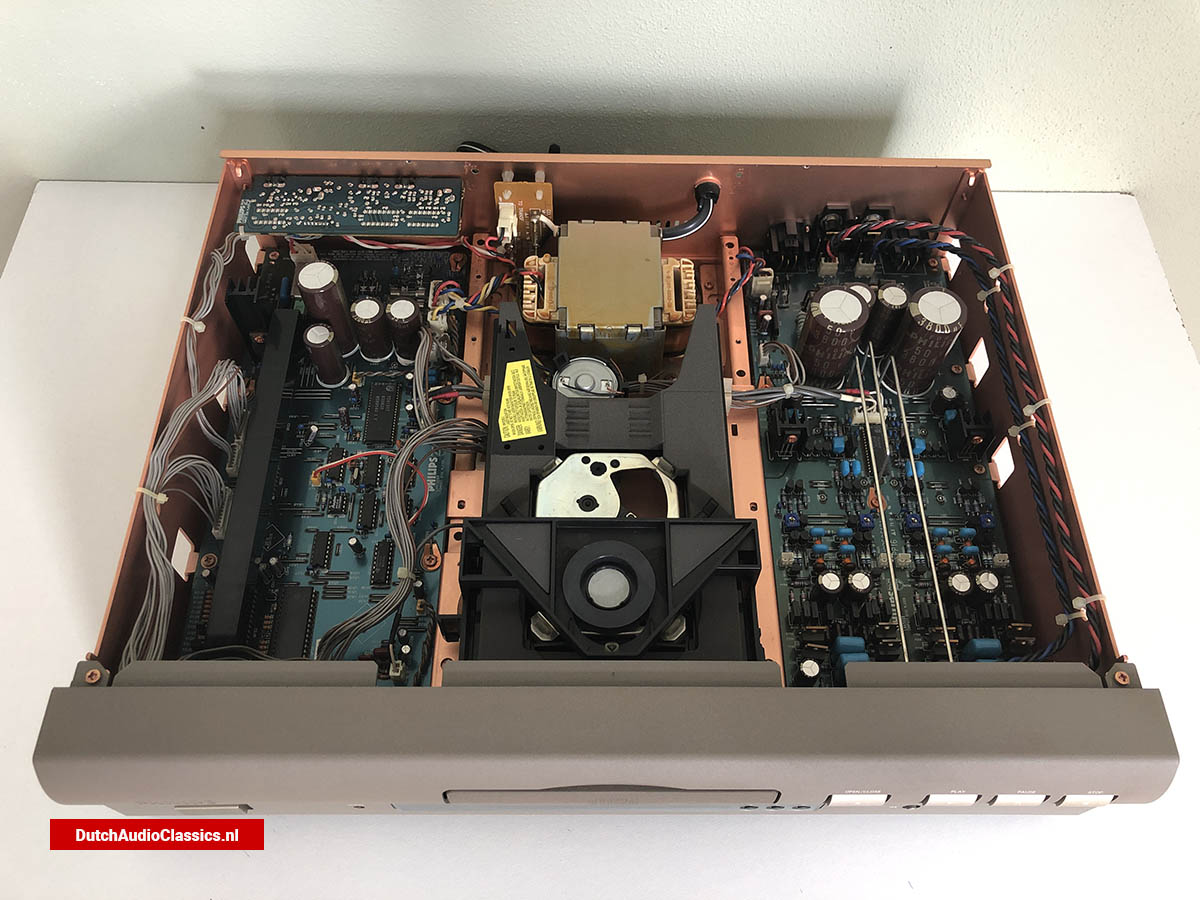
This separation is important. Digital circuits generate noise. Analogue circuits are sensitive to it. By giving each domain its own physical area, the designers reduced the chance of unwanted interaction.
The layout also supports mechanical balance. Heavy and sensitive elements are placed around the central structure of the chassis. Nothing feels accidental. This is one of the reasons the LHH300R is historically interesting. Its design is not based on one spectacular feature. It is based on the alignment of many decisions.
More than a disc player
The LHH300R was also designed to function as a digital control centre. It includes three digital inputs: two optical and one coaxial. This allowed external digital sources to use the player’s DAC system and its Non-NFB analogue output stage.
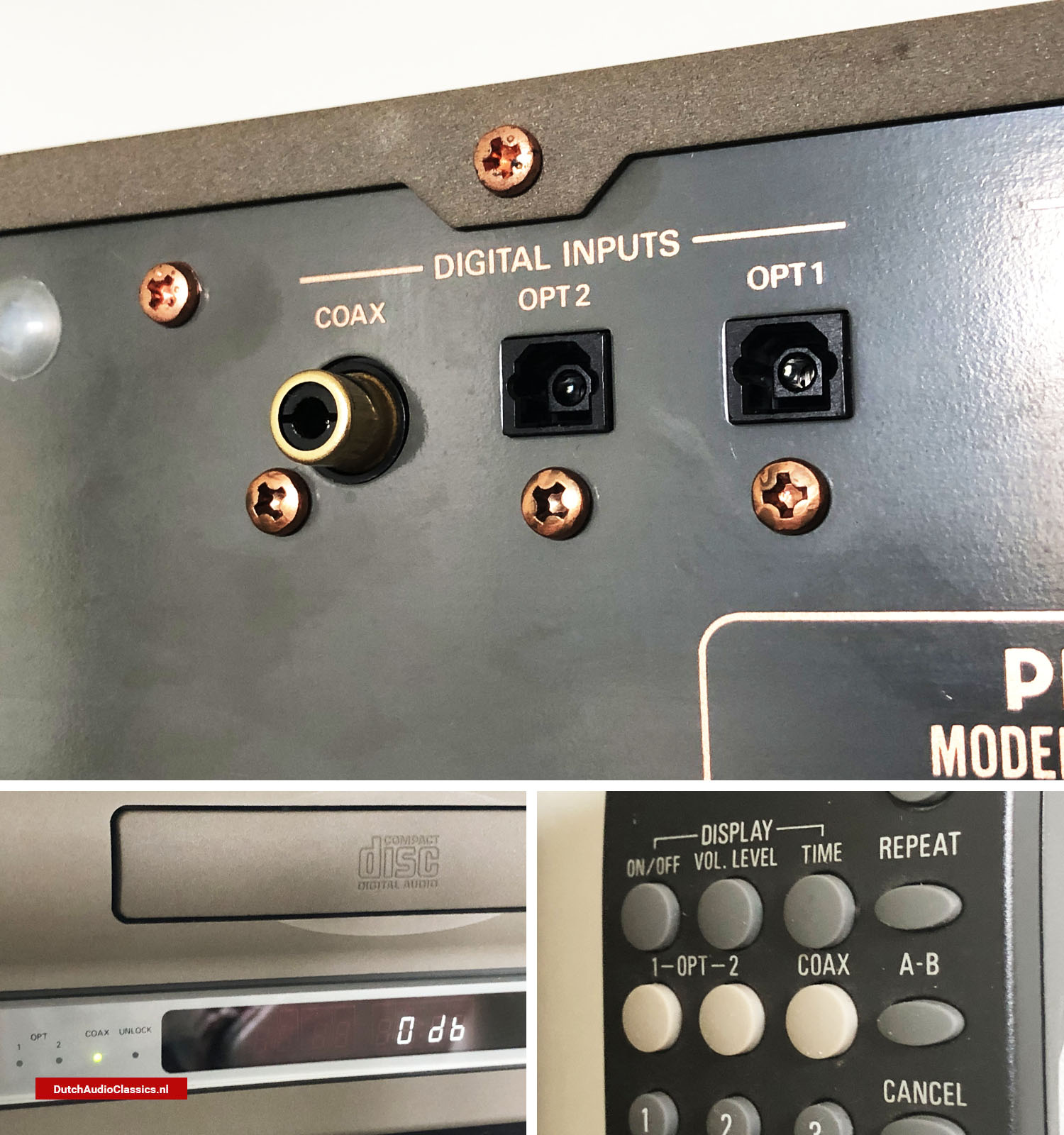
In the mid-1990s, this was a meaningful feature. A user could connect a separate transport, DAT recorder or other digital source and treat the LHH300R as a high-quality standalone D/A converter. The player also includes digital volume control, adjustable from 0 dB to -60 dB in 1 dB steps. This made it possible to connect the player directly to a power amplifier.
That suited the design philosophy. Fewer boxes, fewer stages and a shorter signal path all fitted the late LHH idea. The LHH300R was not only a CD player with extra inputs. It was conceived as the digital centre of a serious system.
The people and culture behind it
The LHH300R also belongs to a human story. Philips supplied the core technologies: the CD mechanisms, decoder architecture and DAC systems. But the final high-end character of these products was shaped in Japan, where Philips and Marantz engineering cultures overlapped.
Satoshi “Tetsu” Suzuki was central to this generation of designs. His name is associated with the Philips LHH800R, Philips LHH900R, Philips LHH A700 amplifier and Marantz Project D-1. His approach moved away from simply chasing catalogue specifications. It placed importance on spatial impression, musical energy and emotional naturalness.
 Tetsu Suzuki, Marantz Japan engineer involved in the development of high-end Philips-based CD players during the early 1990s.
Hideki Kato, later associated with SOULNOTE, is another figure connected to this broader design culture, where speed, simplicity and feedback-free circuitry remained important themes.
The LHH300R reflects this environment. It carries the Philips name, but its character is strongly tied to the Sagamihara engineering culture that shaped many respected Marantz high-end products of the 1990s.
A relative of the LHH900R and Project D-1
The LHH300R is best understood as the accessible counterpart to the LHH900R. The flagship was rarer, heavier and more expensive. But the LHH300R carried much of the same thinking: DAC7 conversion, DF7 digital processing, Non-NFB analogue circuitry, strong mechanical construction and careful separation of circuit domains.
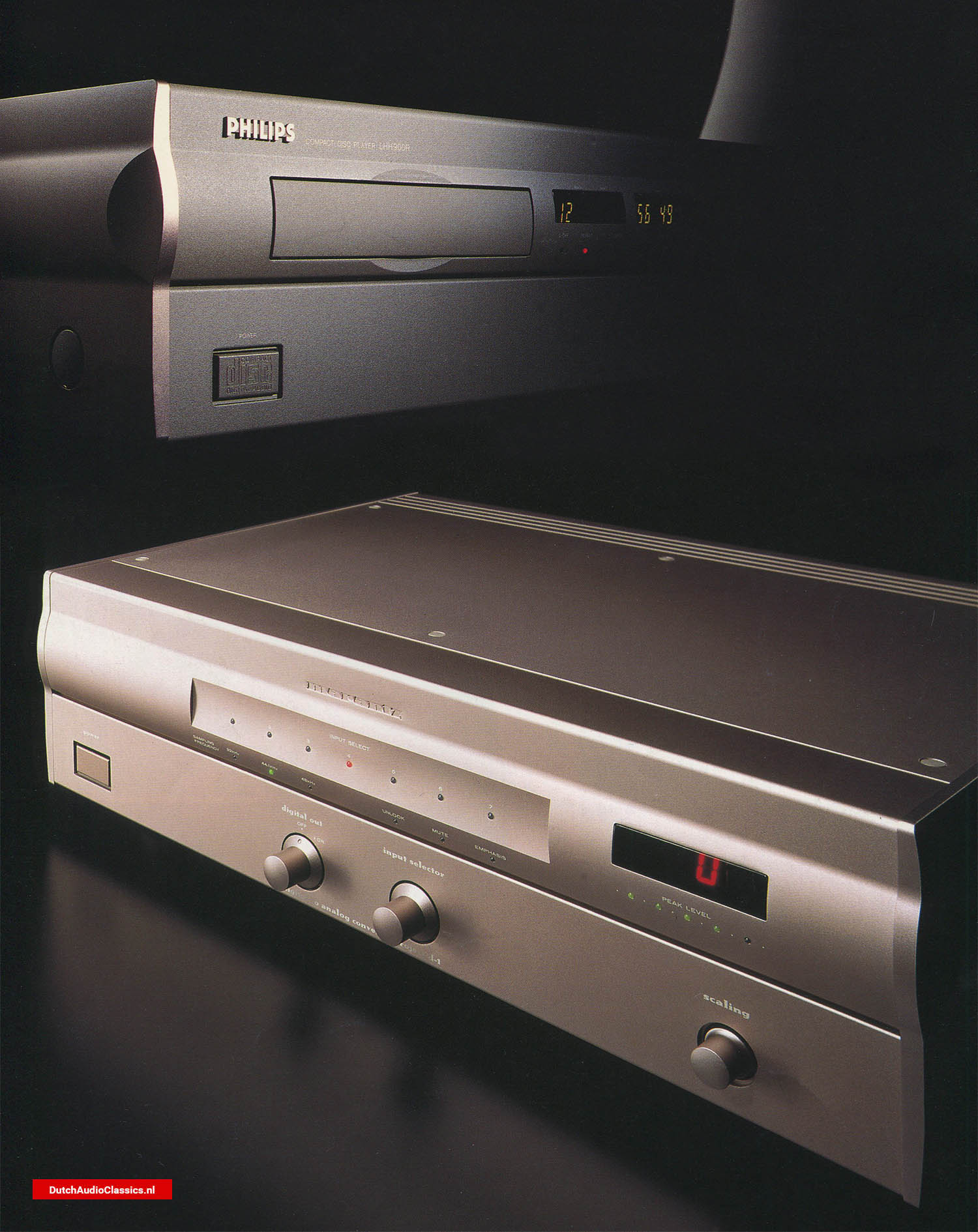 The Philips LHH900R cdplayer (top) and the Marantz Project D1 d/a converter (bottom).
It also has a philosophical connection to the Marantz Project D-1. The two machines are not technical twins. The Project D-1 belongs to the final flowering of Philips’ classic multi-bit TDA1541A S2 technology. The LHH300R represents the later Bitstream DAC7 generation. Yet both products ask the same deeper question. How can digital replay be made less mechanical and more musically convincing?
Their answers differ in conversion method, but overlap in culture. Both value power supply quality, mechanical control, short signal paths, discrete analogue stages and careful listening. This makes the LHH300R an important link between Philips technology and Marantz Japan’s high-end sensibility.
Historical significance
The Philips LHH300R is easy to overlook. It does not have the extreme rarity of the LHH900R. It does not have the pioneering status of the LHH2000 or LHH1000. It does not have the same symbolic reputation as some Marantz-branded reference machines.
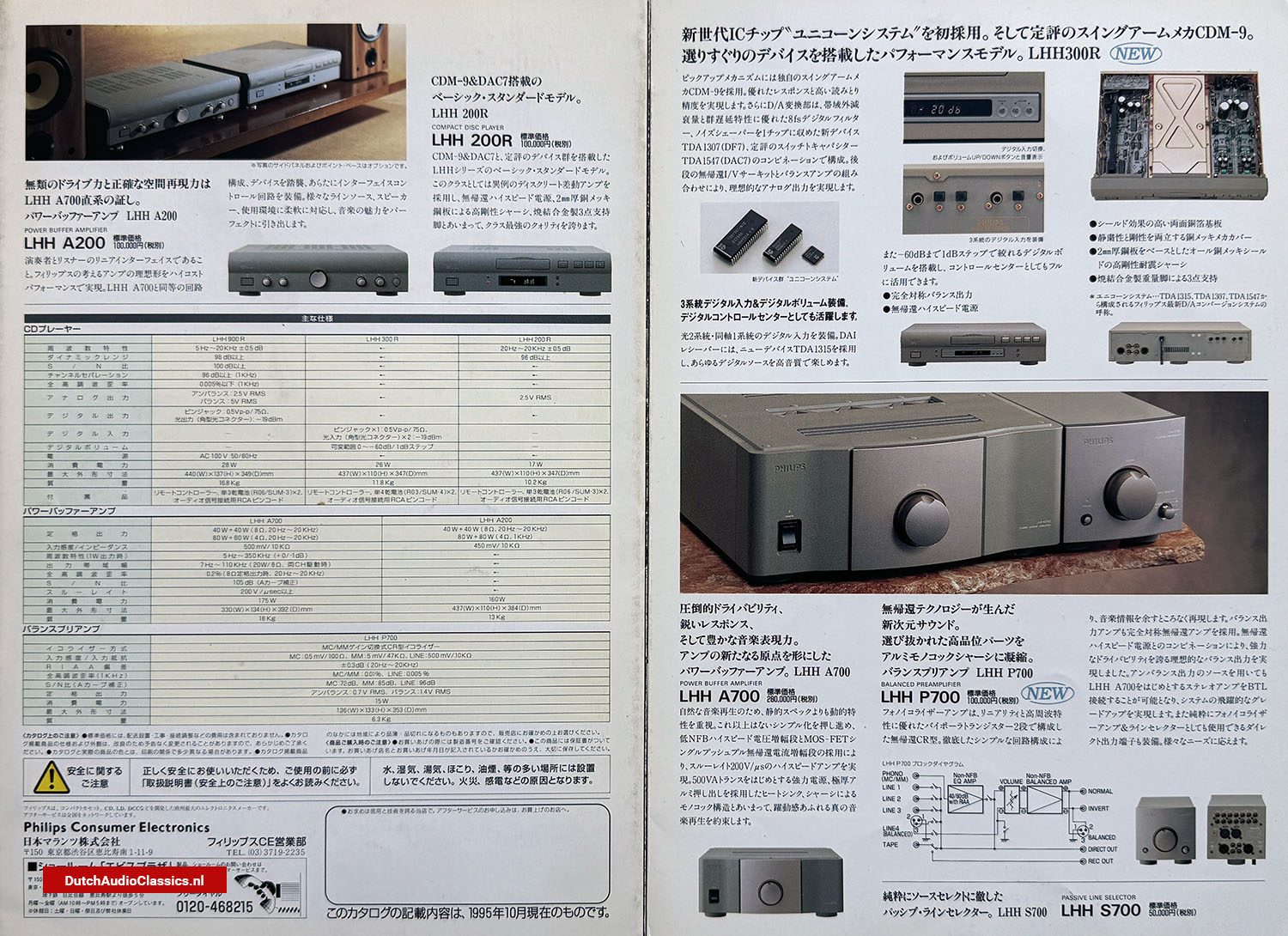
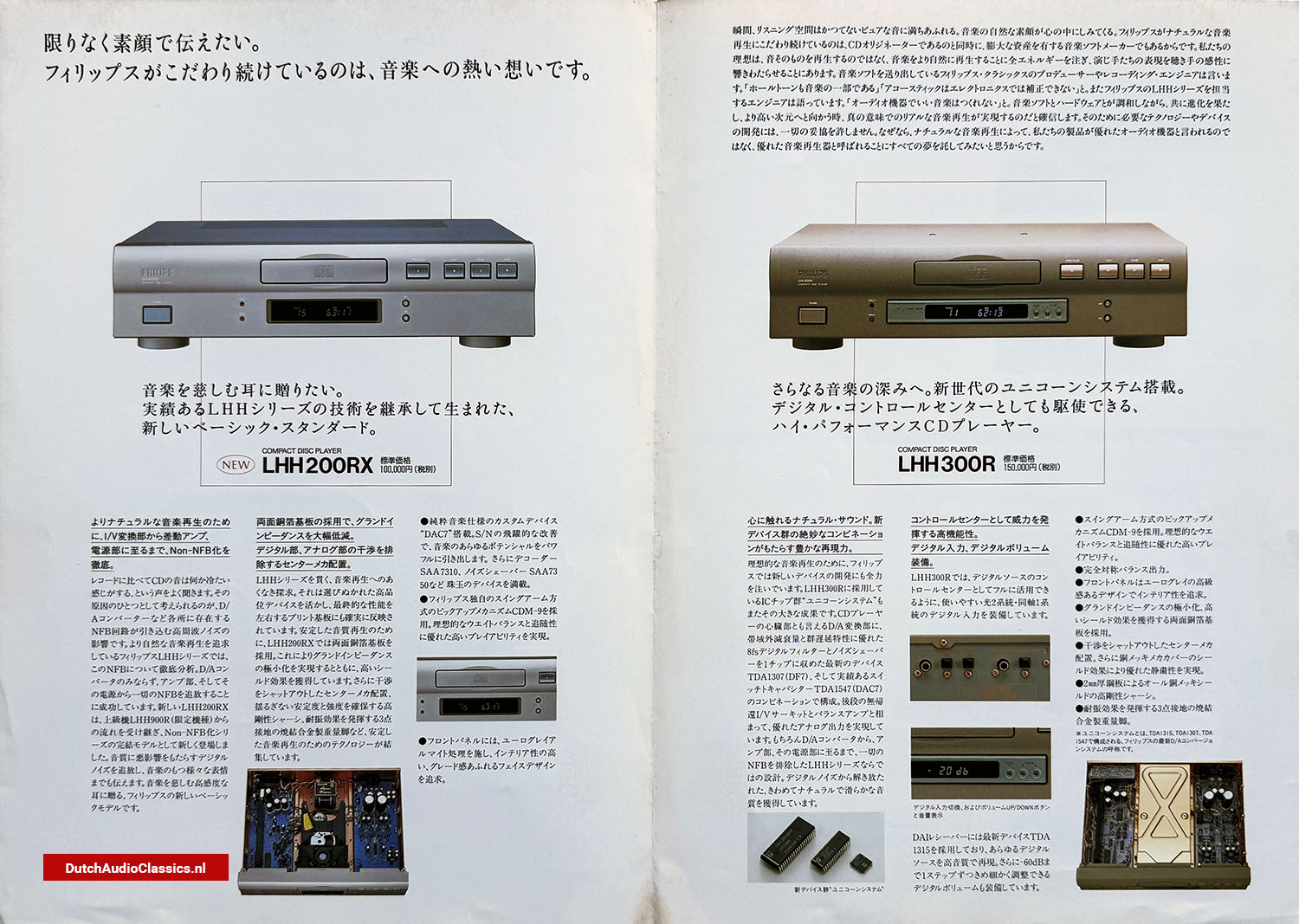
Yet technically and historically, it is one of the most complete expressions of the later LHH philosophy. It combines the mature Philips DAC7 Bitstream system with the DF7 digital filter and noise shaper. It uses the CDM-9 swing-arm transport in a balanced, centre-mounted chassis. It offers balanced outputs, digital inputs and digital volume control. Most importantly, it brings the full Non-NFB concept of the LHH900R into a more attainable high-end model.
The LHH300R shows Philips and Marantz Japan at a moment when digital audio was no longer new, but still not fully settled in the minds of critical listeners. The challenge was no longer to prove that CD worked. It was to make CD feel alive.
Their answer was not simply more bits, more filtering or more corrective circuitry. It was simplification, speed, shielding, mechanical control and a direct signal path. The LHH300R remains valuable because it embodies that belief so clearly. It is not just a Japanese-market CD player from 1995. It is a compact statement of a late Philips design philosophy: that digital sound becomes more natural not by adding more correction, but by preventing unwanted disturbance from entering the music in the first place.
The Philips LHH300R is best understood as a carefully balanced machine. It did not try to impress through size alone, or through a long list of fashionable specifications. Its strength lies in the way each choice supports the next: the DAC7/DF7 architecture, the Non-NFB analog stage, the CDM-9 transport and the solid copper-plated chassis.
In that sense, the LHH300R tells us something about the late Philips and Marantz Japan design culture. Natural digital sound was not treated as the result of one special part. It came from control, simplicity and careful listening. That makes the LHH300R more than a model in the LHH Reference series. It is a clear example of a design idea carried through with discipline.