This blog explores the Non-NFB philosophy behind the Philips LHH series and its roots in the collaboration between Philips and Marantz Japan. It explains why these engineers questioned conventional negative feedback design and focused instead on natural musical reproduction, high-speed circuitry and listening-based development.
Placed within the context of Japanese high-end audio in the late 1980s and 1990s, the article highlights how Non-NFB thinking shaped models such as the LHH900R, LHH800R, LHH300R and the LHH A200 and A700 amplifiers.
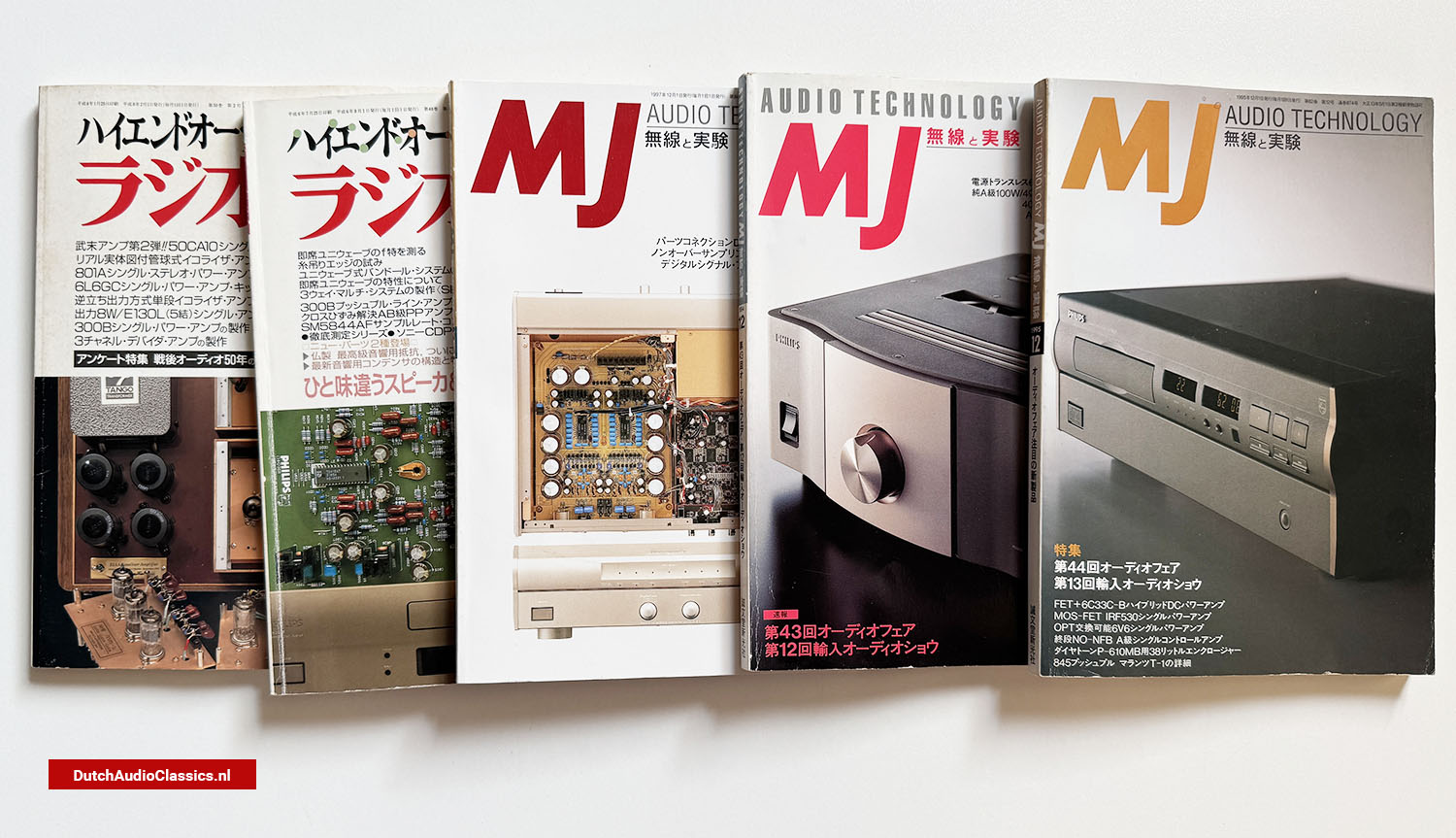
Introduction: When digital audio brought new questions
The introduction of the Compact Disc in the early 1980s changed audio reproduction significantly. Digital technology offered clear advantages, including a low noise floor, stable playback and a high level of measurable accuracy.
During the years that followed, manufacturers continued improving digital equipment. Lower distortion, lower noise levels and wider frequency response became important parts of product development.
At the same time, engineers, reviewers and listeners continued to discuss how technical measurements related to the experience of listening to music. A CD player could perform very well in laboratory measurements, while listeners could still have different opinions about its presentation.
Within this context, Philips and Marantz Japan explored several design choices that focused not only on measured performance but also on listening evaluation. One of these developments became known as Non-NFB (Non-Negative Feedback).
What is Non-NFB? A simple explanation
Negative feedback is a way of correcting a circuit after it has amplified the signal. A small part of the output signal is sent back to the input, but in opposite phase. This allows the circuit to compare the output with the input and reduce errors such as distortion. It is a very useful technique and is used in many good audio products.
Non-NFB takes a different route. Instead of correcting the signal afterwards with a global feedback loop, the circuit is designed to make as few errors as possible from the start. That means the amplifier stage itself has to be very linear, stable and fast.
A simple comparison is this: negative feedback is like correcting a text after it has been written. Non-NFB is more like trying to write the text as accurately as possible in the first place. Both approaches can lead to good results, but they rely on a different way of working.
In the later Philips LHH models, this meant using discrete analogue circuits, carefully selected components, stable power supplies and short signal paths. The idea was not simply to remove feedback, but to build the circuit in such a way that less correction was needed afterwards.
The schematic in figure 1 shows the overall signal path of the Philips LHH900R. The digital audio signal is processed by the digital filter and noise shaper before being converted by the TDA1547 DAC. The differential current outputs are then converted into voltage by passive I/V circuits and fed into the discrete Non-NFB balanced amplifier, which also incorporates the second-order low-pass filter before delivering the balanced analogue output.
![Simplified signal path of the Philips LHH900R, showing the DAC7 digital processing, passive I/V conversion and the discrete Non-NFB balanced amplifier.]() Figure 1: Simplified signal path of the Philips LHH900R, showing the DAC7 digital processing, passive I/V conversion and the discrete Non-NFB balanced amplifier.
Figure 1: Simplified signal path of the Philips LHH900R, showing the DAC7 digital processing, passive I/V conversion and the discrete Non-NFB balanced amplifier.
The philosophy behind Non-NFB
Non-NFB was part of a broader approach to audio development.
During the late 1980s and early 1990s, measurements remained an important part of designing high-quality audio equipment. Philips and Marantz Japan combined these measurements with extensive listening sessions during the development process.
This approach was closely connected to the work of Ken Ishiwata, who played an important role in the sound tuning of many Marantz products. His work combined technical evaluation with careful listening, reflecting the idea that measurements and listening could complement each other.
A phrase often associated with the Japanese development teams was: "You cannot talk about music through specifications alone."
This philosophy influenced many areas of the LHH designs. Signal paths were kept short, analogue stages were simplified, components were selected carefully and mechanical construction received considerable attention.
The birth of Non-NFB: The Philips LHH A700 prototype
The origins of the Non-NFB approach within the Philips LHH project are closely connected to Japanese engineer Tetsu Suzuki.
During the development of CD players such as the Philips LHH800R, Suzuki built a prototype amplifier that was used as a reference tool during listening and development work.
The amplifier was designed without conventional global negative feedback and depended on the linear behaviour and speed of the circuit itself.
The prototype was demonstrated publicly in 1993 and attracted significant interest. This eventually led to the introduction of a commercial version.
In 1994, Philips introduced the LHH A700 Power Buffer Amplifier. The term "Power Buffer" described the intended role of the amplifier within the system: transferring the signal with minimal influence from the amplification stage.
The Philips LHH A700 Power Buffer Aplifier became one of the first commercial products to apply the principles that later appeared throughout the Non-NFB LHH range.
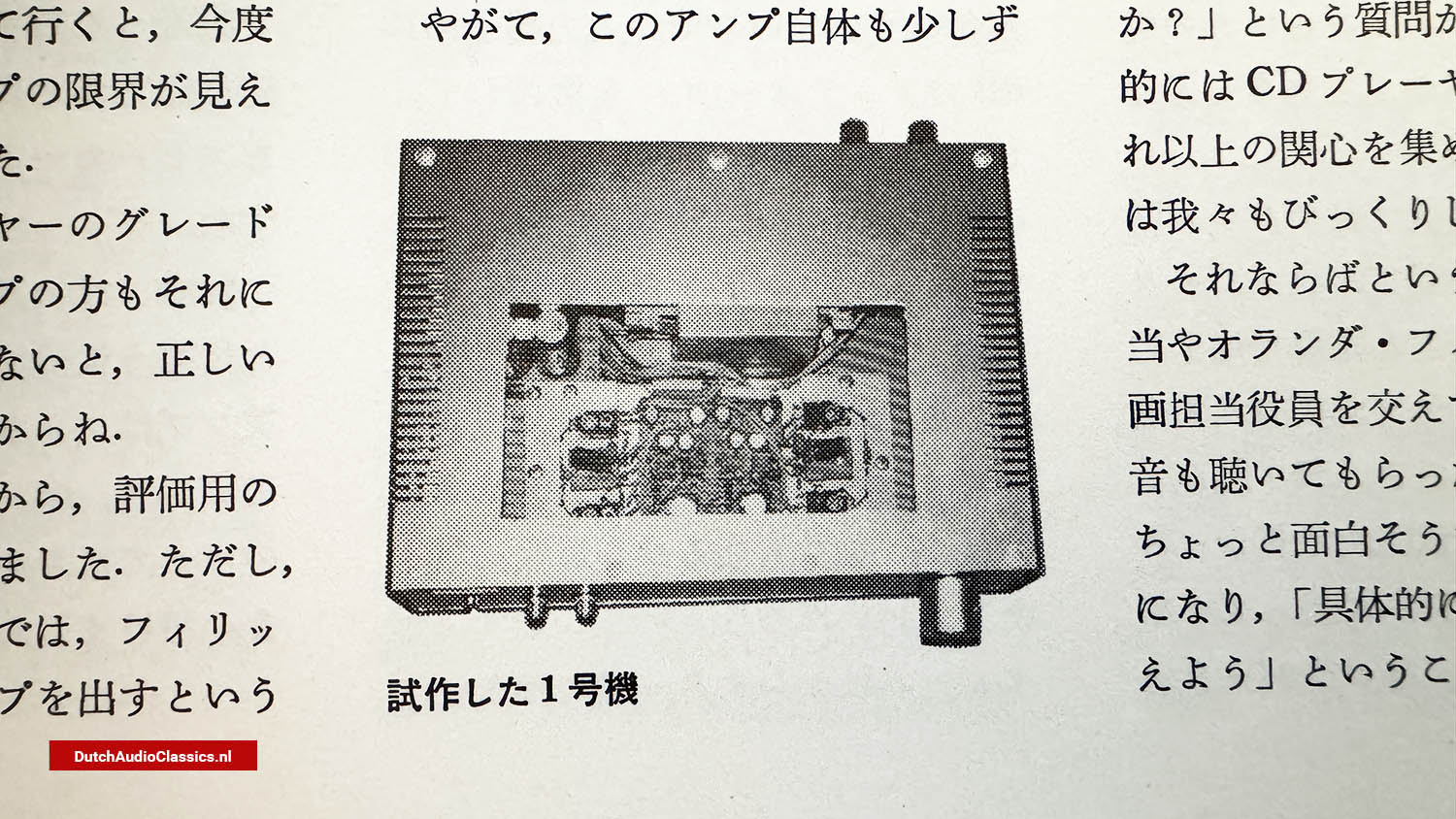 Early prototype of the Philips LHH A700, used as the foundation for the amplifier’s final circuit and mechanical design.
The technical challenges of Non-NFB
Reducing or removing negative feedback placed higher demands on the circuit itself.
In conventional designs, negative feedback can reduce certain errors caused by component variations or non-linear behaviour. In a Non-NFB circuit, more of the performance depends on the quality of the circuit design, the selection of components and the stability of the surrounding electronics.
This led Philips and Marantz Japan to pay close attention to discrete analogue circuits, component matching, signal paths and power supply design.
Similar design ideas can also be found in the later work of Japanese audio designer Hideki Kato. In his own designs, Kato often emphasized short signal paths, discrete analogue stages and reducing unnecessary circuit elements between the source and the listener.
Other areas such as PCB layout, grounding and mechanical construction also received considerable attention. The later LHH models used heavy chassis constructions, copper-plated parts and dedicated power supply designs to create stable operating conditions for the audio circuits.
As a result, developing Non-NFB products required more careful engineering and a greater focus on individual parts of the design.
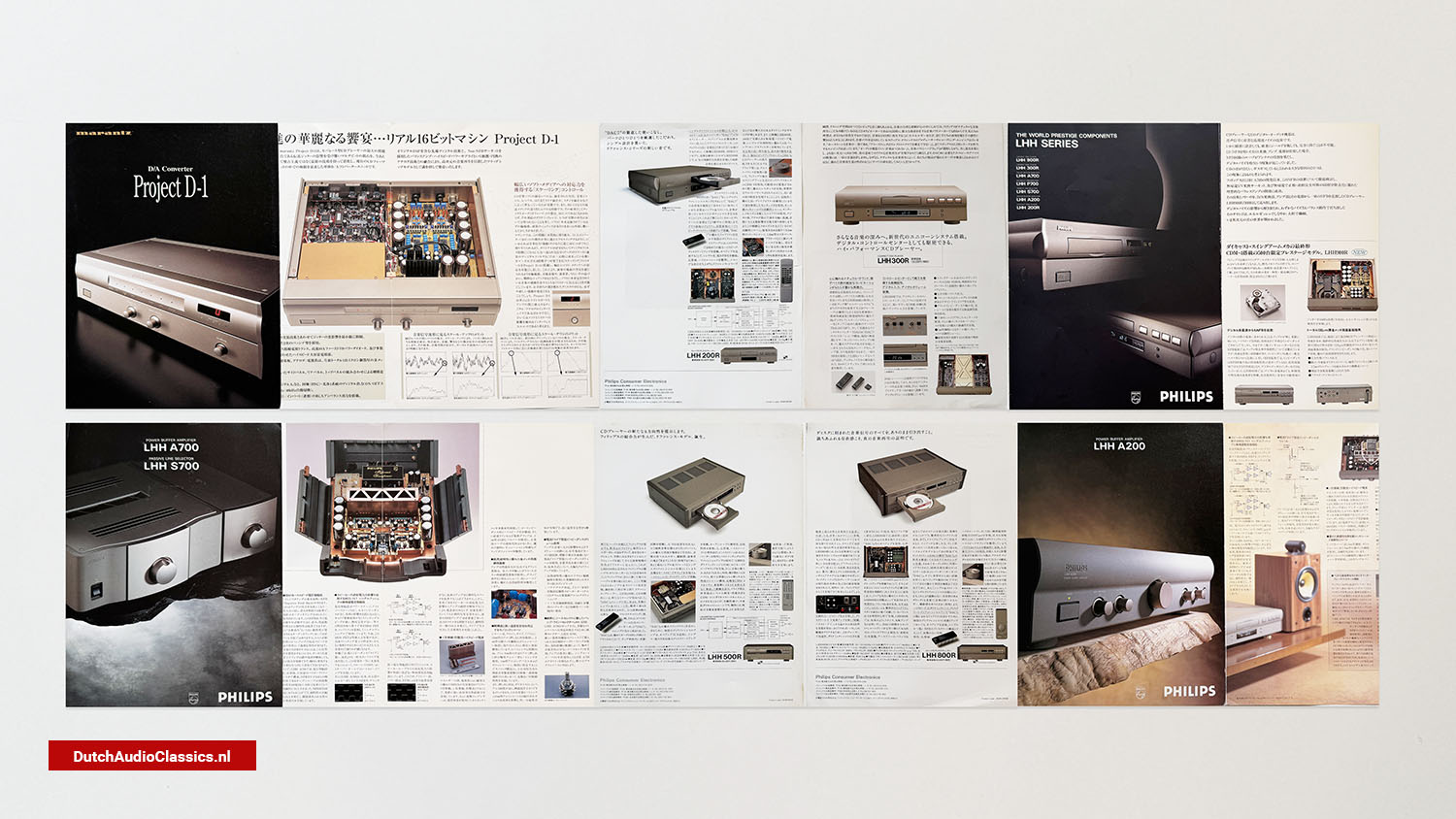
The foundation: Philips LHH500R and LHH800R
The first clear applications of the Non-NFB approach in Philips CD players appeared in the Philips LHH500R and later the Philips LHH800R.
The LHH500R introduced a low-feedback analogue stage. It marked an early step in reducing the use of conventional feedback in the analogue signal path.
The Philips LHH800R developed this concept further. After the TDA1547 DAC, the signal passed through passive low-pass filtering and a discrete I/V amplifier before entering a single discrete differential amplifier. This stage included a first-order passive low-pass filter and maintained a balanced signal path towards the analogue outputs.
The design reduced the number of amplification stages compared with earlier approaches and placed more emphasis on discrete circuitry, short signal paths and dedicated high-speed Non-NFB power supplies for the analogue sections.
Documentation and reviews from the period describe the LHH800R as a player with a fast, open and natural presentation. The model showed how the Non-NFB approach could be implemented in a complete CD player before the architecture was further integrated in the LHH900R.
The schematic in figure 2 shows the analogue signal path of the Philips LHH800R. After digital processing by the SAA7350 and TDA1547 DAC, the differential DAC outputs pass through passive low-pass filters and discrete I/V amplifiers before entering a single discrete differential amplifier with an integrated first-order passive low-pass filter.
This simplified architecture reduced the number of amplification stages while maintaining a fully balanced signal path, forming an important step towards the more integrated Non-NFB analogue stage introduced in the Philips LHH900R.
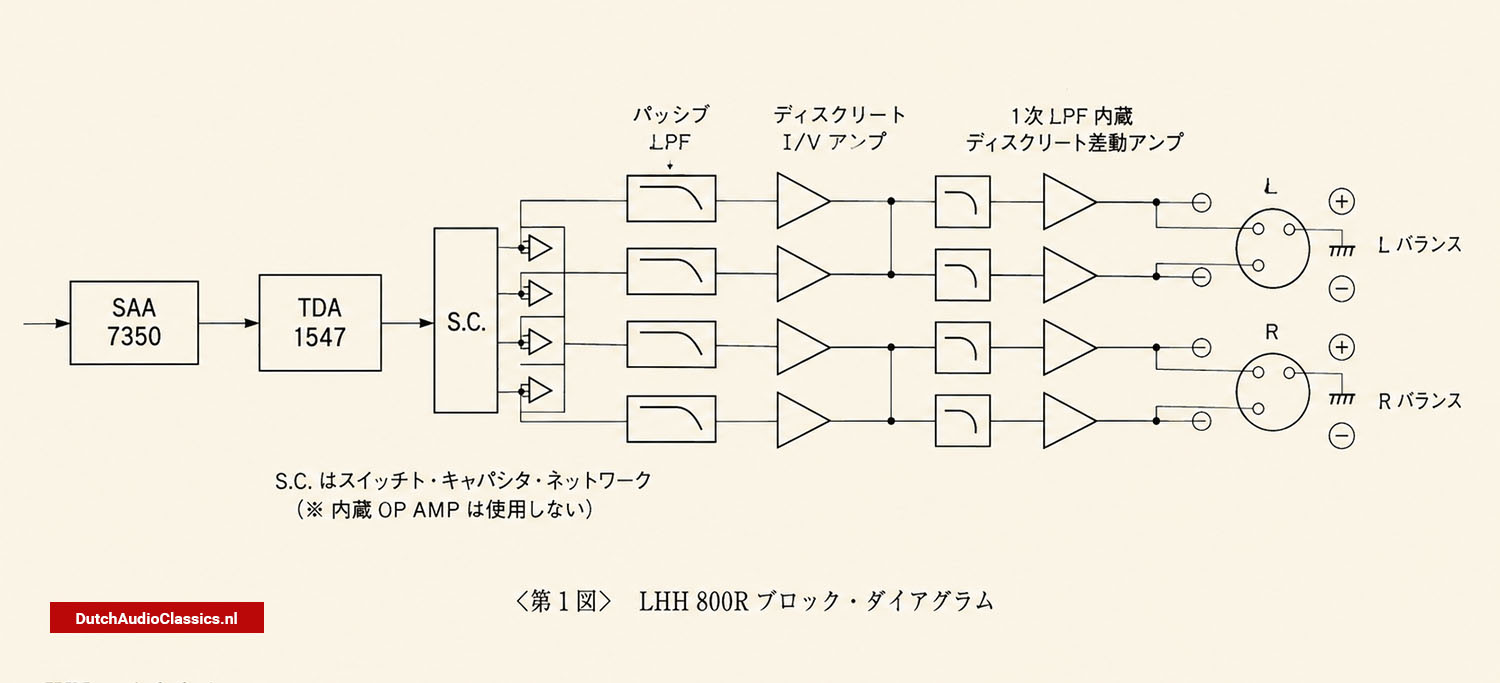 Figure 2: Simplified block diagram showing the analogue signal path of the Philips LHH800R, from the DAC7 Bitstream DAC to the balanced analogue outputs.
The expansion of Non-NFB: Philips LHH200R and LHH300R
After the introduction of the LHH800R, the Non-NFB approach was applied to additional models within the LHH range, including the Philips LHH200R and Philips LHH300R.
Although positioned differently within the product range, both players shared the same design principles. Their analogue stages used Non-NFB circuits, combined with discrete components, dedicated power supplies and attention to the quality of the signal path.
The Philips LHH300R incorporated several construction elements that were also found in the higher models, including a more advanced mechanical construction and a more extensive power supply design. It occupied a position between the LHH200R and the larger reference models.
The LHH200R and LHH300R show how the Non-NFB approach was applied across multiple CD players within the Philips and Marantz Japan collaboration.
The Philips LHH900R
The Philips LHH900R represented the final step in the development of the Non-NFB philosophy within the Philips LHH series. It did not introduce a completely new concept, but refined the ideas that had gradually developed through the LHH500R and LHH800R into a more integrated analogue design.
A key change was the use of a fully discrete Non-NFB balanced amplifier. The balanced current outputs of the DAC were first converted into voltage by passive I/V converters before entering the discrete amplifier. Within this stage, amplification, low-pass filtering and balanced output buffering were combined into a short and direct signal path.
The analogue stage was supported by a High-Speed Non-NFB power supply. Instead of using standard integrated voltage regulators, Marantz Japan developed a discrete supply with constant-current FETs, zener reference circuits and transistor regulators. This was intended to provide a fast and stable power source for the critical analogue and digital sections.
The LHH900R also received careful attention in grounding, PCB layout, shielding and mechanical construction. These choices helped reduce interference between the digital and analogue sections and created stable conditions for the Non-NFB circuitry.
Within the Philips LHH series, the LHH900R remains the most complete implementation of this design approach. It brought together the experience gained from the earlier LHH players and formed an important link to the later Marantz Project D1.
The schematic in figure 3 shows the discrete +5V High-Speed Non-NFB power supply used in the Philips LHH900R. Instead of relying on an integrated voltage regulator, the circuit is built from discrete transistors, constant-current FETs and zener diode reference circuits. This design was developed to provide a fast and stable power supply with minimal interference for the player's critical analogue and digital circuitry.
![Simplified schematic showing the discrete High-Speed Non-NFB power supply developed for the Philips LHH900R.]() Figure 3: Simplified schematic showing the discrete High-Speed Non-NFB power supply developed for the Philips LHH900R.
Figure 3: Simplified schematic showing the discrete High-Speed Non-NFB power supply developed for the Philips LHH900R.
The schematic in figure 4 shows the discrete Non-NFB balanced analogue amplifier used in the Philips LHH900R. The signal enters on the left as a balanced positive and negative pair, is processed through a fully discrete transistor circuit, and leaves on the right as normal and inverted outputs. The circuit uses symmetrical amplification stages, constant-current sources, bias networks and MOSFET output devices, without a conventional global negative feedback loop from the output back to the input.
![Simplified schematic of the Philips LHH900R discrete Non-NFB balanced amplifier.]() Figure 4: Simplified schematic of the Philips LHH900R discrete Non-NFB balanced amplifier.
Figure 4: Simplified schematic of the Philips LHH900R discrete Non-NFB balanced amplifier.
Non-NFB in power amplification: Philips LHH A700 and LHH A200
The Non-NFB approach was also applied outside the CD player range.
The Philips LHH A700, based on T. Suzuki’s original prototype amplifier, introduced the same design principles in a power amplifier. The later LHH A200 followed the same direction in a more compact model.
Both amplifiers used a feedback-free MOS-FET output stage with a wide bandwidth and high slew rate. The design focused on reproducing the incoming signal with as little influence from the amplifier as possible.
The LHH A700 and LHH A200 show that Non-NFB was not limited to a single product, but became part of a wider design approach within the Philips and Marantz Japan collaboration.
The schematic in figure 5 shows the amplifier architecture of the Philips LHH A700. Unlike the LHH900R, which applies the Non-NFB philosophy to the analogue output stage of a CD player, the LHH A700 extends the same design principles to a complete power amplifier.
The circuit combines a low-feedback voltage amplification stage with a Non-NFB current amplification stage, followed by a MOSFET output stage. This architecture reflects Marantz Japan's approach of achieving stable, linear amplification through careful circuit design rather than relying on a conventional global negative feedback loop.
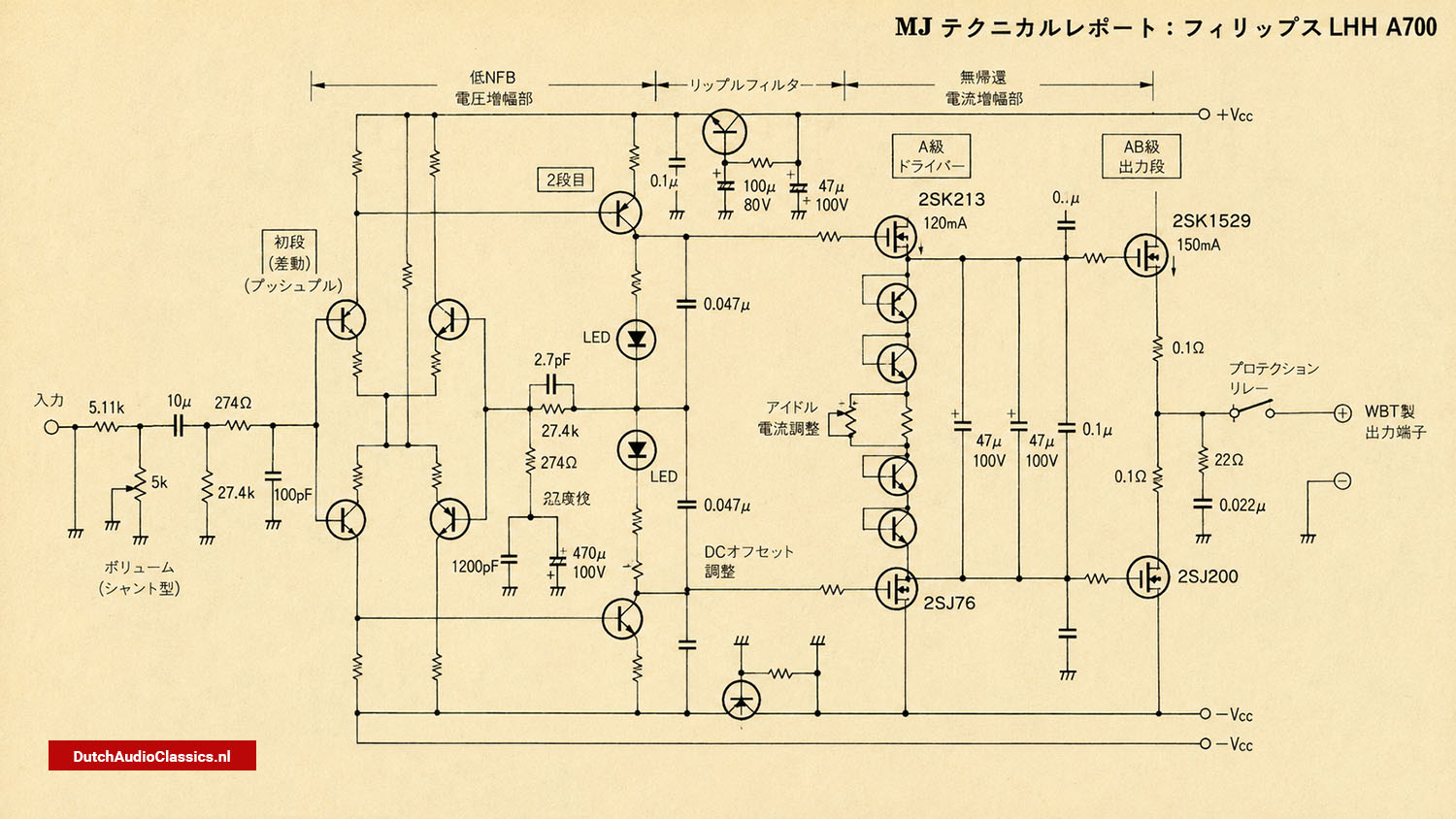 Figure 5: Simplified schematic showing the Low-NFB voltage amplification stage and the Non-NFB current amplification stage of the Philips LHH A700.
Technical insight: How does a Non-NFB circuit work?
In conventional analogue circuits, negative feedback is used to improve linearity. A small portion of the output signal is fed back to the input in opposite phase. The difference between the original input signal and the corrected feedback signal is known as the error signal. The amplifier uses this error signal to reduce non-linearity, lower harmonic distortion and stabilize gain.
The effectiveness of negative feedback can be explained by the difference between open-loop and closed-loop behaviour.
An amplifier without feedback operates in open-loop mode. Its performance is determined entirely by the intrinsic characteristics of the circuit: transistor linearity, bias conditions, power supply stability, component matching and the physical layout of the circuit.
When negative feedback is applied, the amplifier operates in closed-loop mode. The feedback loop continuously compares the output with the input and corrects deviations. This can significantly reduce measured distortion and improve consistency between individual units.
For this reason, negative feedback became one of the most important techniques in modern audio design and is used in the majority of high-performance amplifiers, DACs and analogue stages.
The engineers behind the Philips and Marantz Japan Non-NFB designs focused on the limitations that could occur when applying feedback in very wide-bandwidth, high-speed audio circuits. Their documentation described concerns about the interaction between feedback loops and high-frequency noise from digital circuits, as well as the response of the feedback loop to rapidly changing musical signals.
Their approach was therefore not to correct errors after they occurred, but to reduce the creation of those errors in the first place.
This required a circuit with very high intrinsic performance. In practice, this led to:
- Fully discrete analogue stages instead of integrated operational amplifiers.
- Very wide open-loop bandwidth.
- High slew rate.
- Carefully selected and matched components.
- Short signal paths.
- Symmetrical circuit layouts.
- Highly stable and low-noise power supplies.
- Careful PCB layout and grounding.
In the Philips LHH A700 power amplifier, for example, the Non-NFB MOS-FET output stage achieved an open-loop bandwidth of approximately 500 kHz and a slew rate of 200 V/μs. These values were considered important because they allowed the amplifier to respond to rapid changes in the audio signal without relying on a correction loop.
The same design philosophy was later applied to the analogue stages of the LHH800R, LHH200R, LHH300R and LHH900R CD players. In the LHH900R, the approach was extended further through a dedicated high-speed Non-NFB power supply for the digital circuitry.
From an engineering perspective, Non-NFB does not mean that feedback is inherently inferior. It represents a different design strategy. A conventional feedback amplifier starts with a circuit that can be improved through correction, while a Non-NFB circuit requires the circuit itself to achieve the required performance before any correction is applied.
Both approaches can result in excellent audio performance. The Non-NFB philosophy of Philips and Marantz Japan is interesting because it shows how a small group of engineers explored a different solution during a period of rapid development in digital audio.
Measurements and listening
The development of Non-NFB took place during a period in which digital audio technology was developing rapidly.
Technical measurements remained an essential part of audio design. Negative feedback continued to be widely used because it allowed engineers to achieve low distortion, stable circuits and predictable performance. Many highly regarded audio products were, and still are, based on these principles.
Philips and Marantz Japan approached the subject from a broader perspective. Alongside technical measurements, listening sessions played an important role during the development of the LHH products.
Ryuichi Sawada, who was responsible for Sound Quality Control at Marantz Japan, was closely involved in these evaluations. Listening sessions were carried out under controlled conditions, often over longer periods of time. According to accounts from that period, some sessions were held during evenings and weekends, when disturbances from the electrical power grid were believed to be lower.
For the development team, listening was not a replacement for technical measurements, but an additional method of evaluating the final result.
The sound of Non-NFB
The sound of the Non-NFB LHH models has been described in many reviews and listening reports from the 1990s.
Common descriptions include a fast and open presentation, a spacious soundstage, natural voices and a relaxed character during longer listening sessions. Reviews of models such as the LHH800R, LHH300R and LHH900R often mention the combination of detail and ease in the presentation.
These descriptions reflect the experiences of reviewers and listeners from that period. They also correspond with the design goals described by Philips and Marantz Japan, where signal speed, simplified analogue circuits and the reduction of unwanted influences within the audio path received significant attention.
The legacy continues: Marantz Project D1
Although the Marantz Project D1 was never part of the Philips LHH series, it represents a direct continuation of the same engineering philosophy.
Like the LHH900R, the Project D1 uses a fully discrete balanced analogue amplifier built around the Non-NFB principle. Its architecture consists of a differential input stage, a second voltage amplification stage, a ripple filter and a discrete output stage. While the implementation was further refined, the fundamental design approach remained unchanged: achieving linear amplification through circuit topology rather than through a conventional global negative feedback loop.
Technically, the Project D1 shows how Marantz Japan continued to work with symmetrical signal paths, discrete transistor stages and carefully controlled power supply sections. The analogue amplifier processes the normal and inverted signal paths separately, while maintaining a balanced structure through to the output. This allowed the design to preserve the same basic Non-NFB approach, while adapting it to a more advanced standalone digital audio component.
The Project D1 also introduced further refinements in the analogue circuitry, power supply and mechanical construction. Rather than replacing the ideas developed for the LHH series, it built upon them. In that sense, the Project D1 can be seen as the next step in the evolution of the Non-NFB philosophy that had matured throughout the Philips and Marantz Japan collaboration.
The schematic in figure 6 shows the discrete Non-NFB analogue amplifier used in the Marantz Project D1. The balanced input signal passes through a differential input stage, a second voltage amplification stage and a ripple filter before reaching the discrete output stage. Like the earlier LHH models, the amplifier achieves linearity through a carefully designed circuit topology rather than a conventional global negative feedback loop.
The overall architecture clearly demonstrates how the Non-NFB design philosophy continued to evolve while remaining faithful to the engineering principles established during the Philips and Marantz Japan collaboration.
Figure 6: Simplified schematic showing the discrete Non-NFB analogue amplifier used in the Marantz Project D1.
The legacy of the Non-NFB philosophy
The Non-NFB approach was developed during a specific period in the history of digital audio, when engineers were exploring different ways to improve the musical performance of CD players. Many of the technical challenges from that era are addressed differently today, and modern designers have access to technologies, components and measurement techniques that were not available during the development of the Philips LHH series.
Even so, the later LHH models remain valuable examples of a distinctive engineering philosophy. The LHH500R, LHH800R, LHH200R, LHH300R, LHH900R and the LHH A-series demonstrate how Philips and Marantz Japan combined discrete analogue circuitry, carefully designed power supplies, mechanical construction and extensive listening evaluation in the pursuit of natural music reproduction.
The story of Non-NFB is therefore not simply about removing a feedback loop. It reflects a broader way of thinking about audio design—one that continues to inspire engineers and remains an important part of the history of the Philips LHH series.
The story of Non-NFB is therefore not only about the absence of negative feedback. It also shows how different engineering choices were explored during the early years of high-end digital audio, and how these ideas became part of the history of the Philips LHH series.
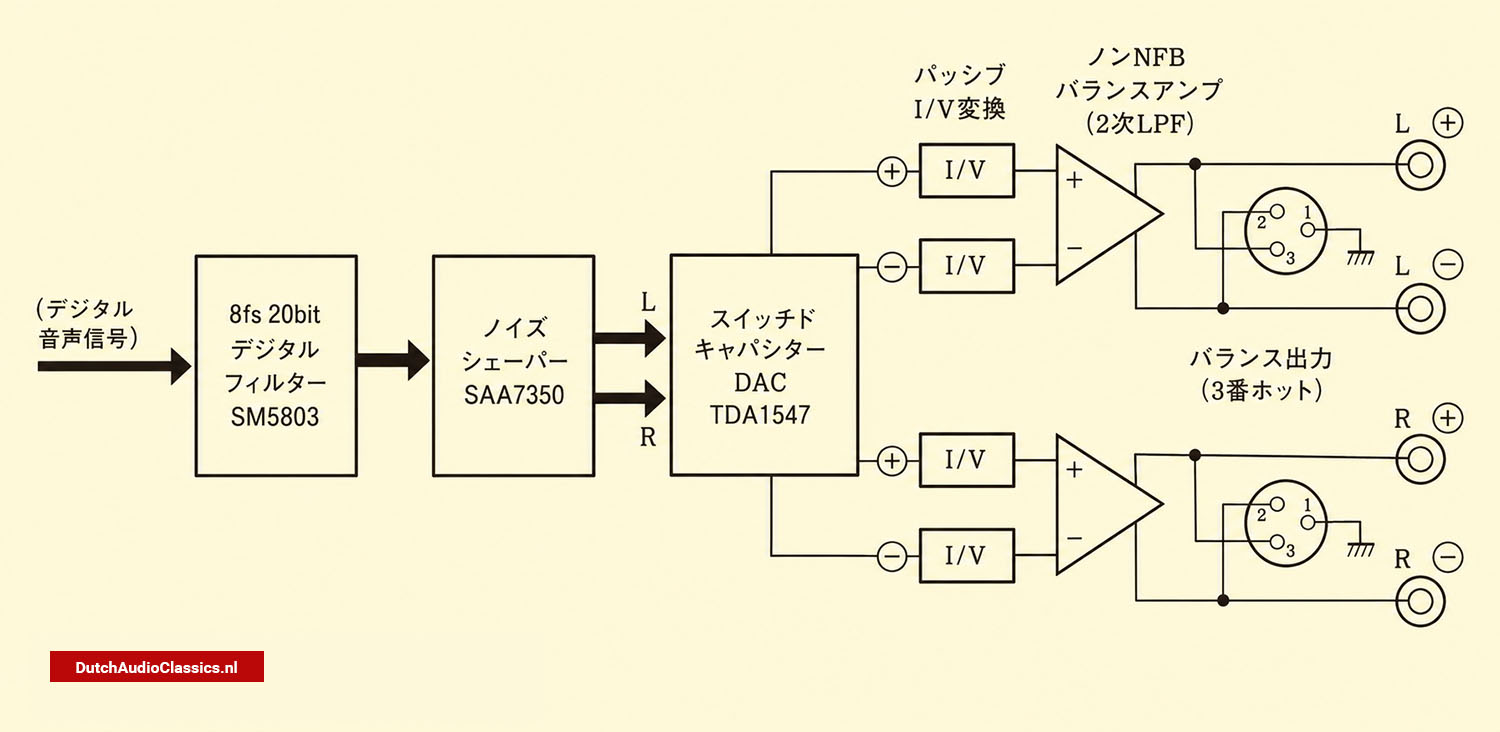 Figure 1: Simplified signal path of the Philips LHH900R, showing the DAC7 digital processing, passive I/V conversion and the discrete Non-NFB balanced amplifier.
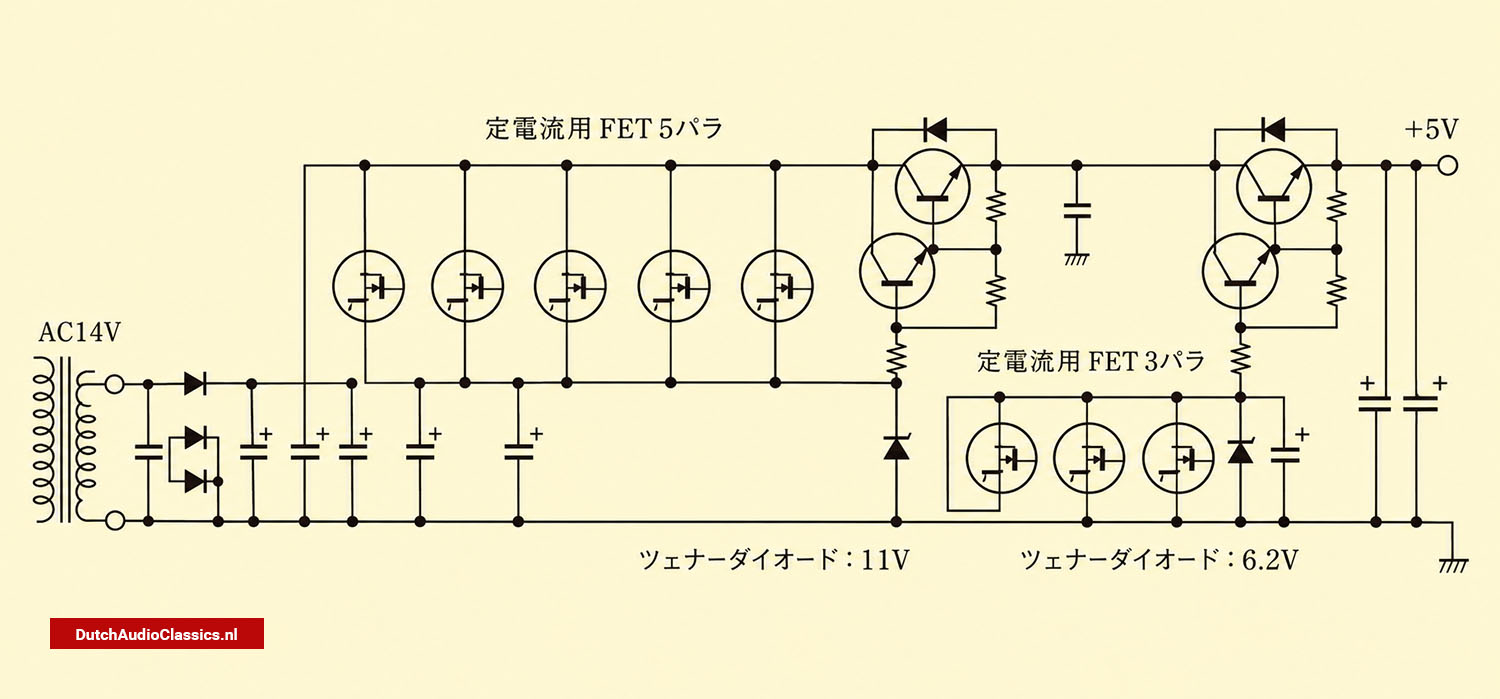 Figure 3: Simplified schematic showing the discrete High-Speed Non-NFB power supply developed for the Philips LHH900R.
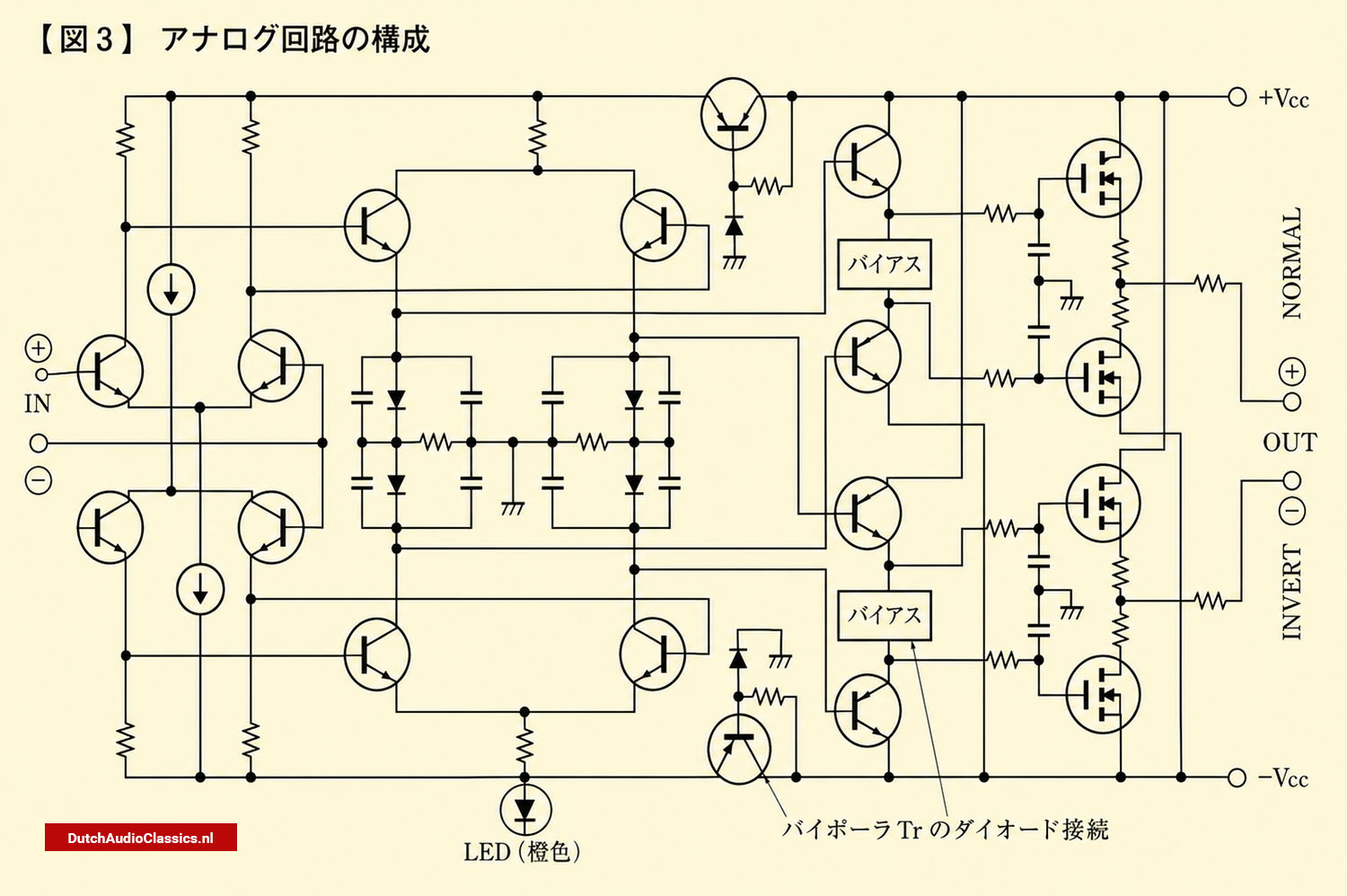 Figure 4: Simplified schematic of the Philips LHH900R discrete Non-NFB balanced amplifier.