By the mid-1990s, the Compact Disc appeared technically mature. The early uncertainties had disappeared. Production was fully scaled worldwide. The CD player was no longer experimental but an established part of the audio system.
Yet beneath that stable surface, important changes were taking place.
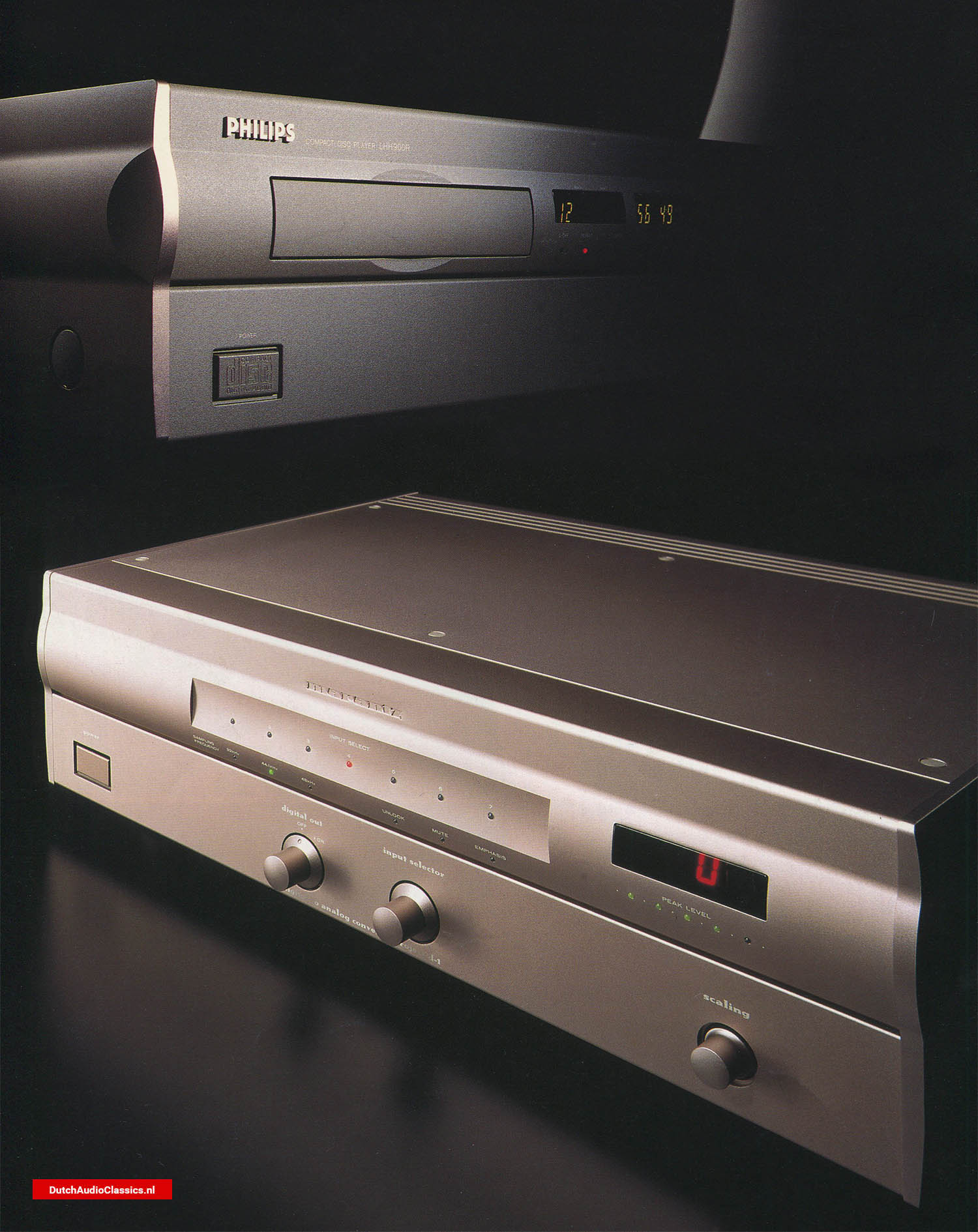
Classic multibit R-2R converters were gradually replaced by 1-bit Bitstream solutions. This was not a minor refinement but a fundamentally different approach to digital conversion. Multibit designs relied on extremely precise resistor ladders. These were difficult and expensive to manufacture, and even small deviations affected linearity.
1-bit systems approached the problem differently. They used very high-speed pulse modulation and shifted accuracy into the time domain. That made chips easier to produce and better suited to large-scale fabrication.
At the same time, the well-known Swing-Arm transports slowly disappeared. The radial-arm mechanism was robust and precise, but also costly. New generations of transports were more compact and less expensive.
The discussion of that era was therefore not only about sound. It was also about manufacturability. About scale. About how a company like Philips could remain competitive in global semiconductor production while still maintaining a high-end audio identity.
Philips Between Scale and Expression
Philips held a unique position. The company had co-created the Compact Disc and supplied digital audio silicon worldwide. During the 1990s, it made a clear strategic commitment to the DAC7 architecture built around the TDA1547.
There were practical reasons for this. The production yield of 1-bit chips was higher. Tolerances were less critical than in multibit ladder designs. That made large-scale fabrication more efficient and predictable.
From Eindhoven’s perspective, this was logical. One digital platform that could serve multiple product lines. A coherent technical foundation adaptable across price segments.
Yet within Philips there was room for interpretation.
In Sagamihara, Japan, a relatively autonomous high-end team operated with its own engineering culture. While headquarters focused on production efficiency and standardization, the Japanese group emphasized sonic refinement and circuit philosophy.
That tension between centralized efficiency and local expression forms the backdrop to two remarkable high-end components from the late 1990s.
The Philips LHH900R as a Closing Statement
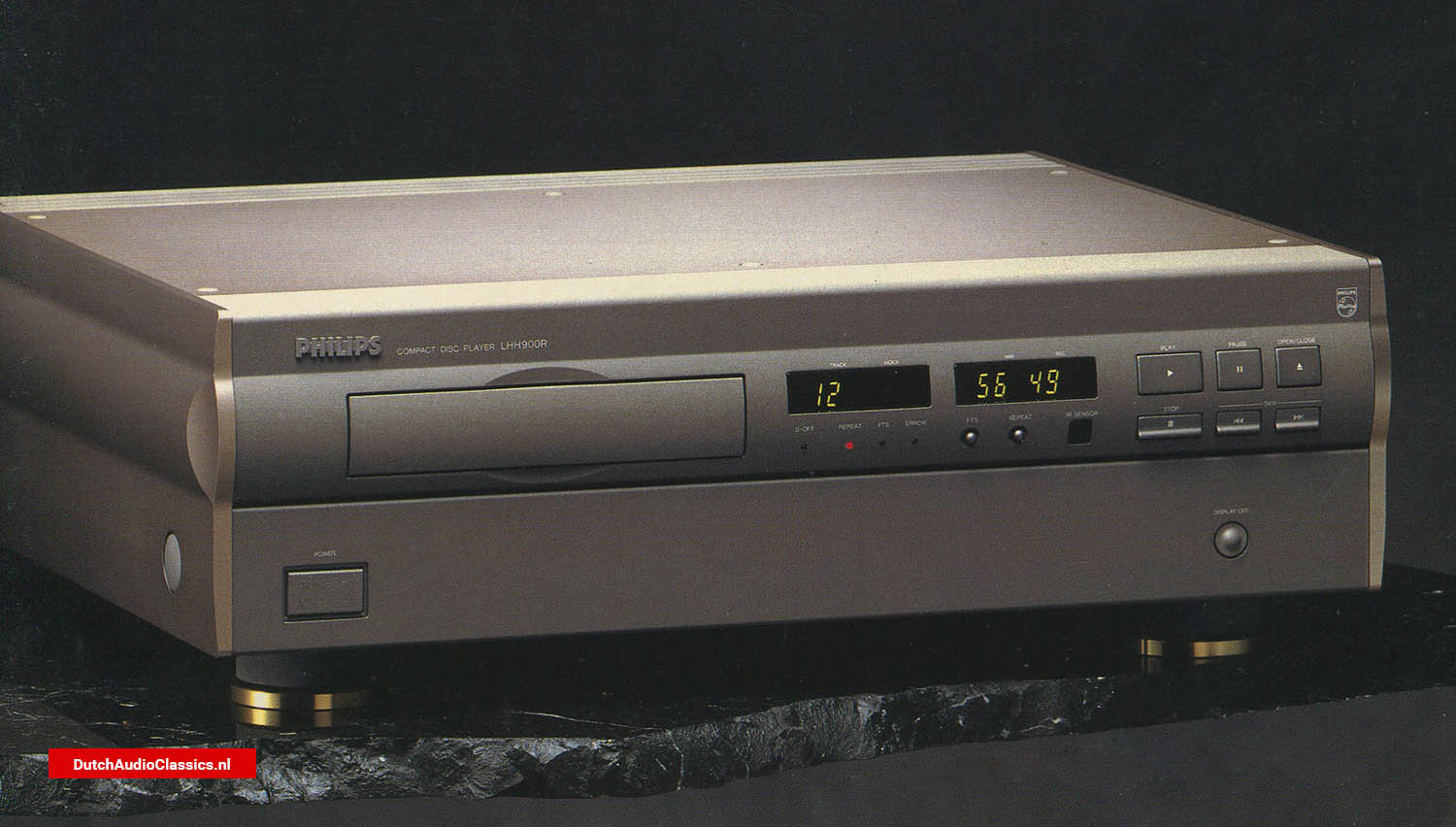
The LHH900R was not designed as a mass-market product. Priced at ¥450,000 and limited to just 500 units, it was conceived as a statement.
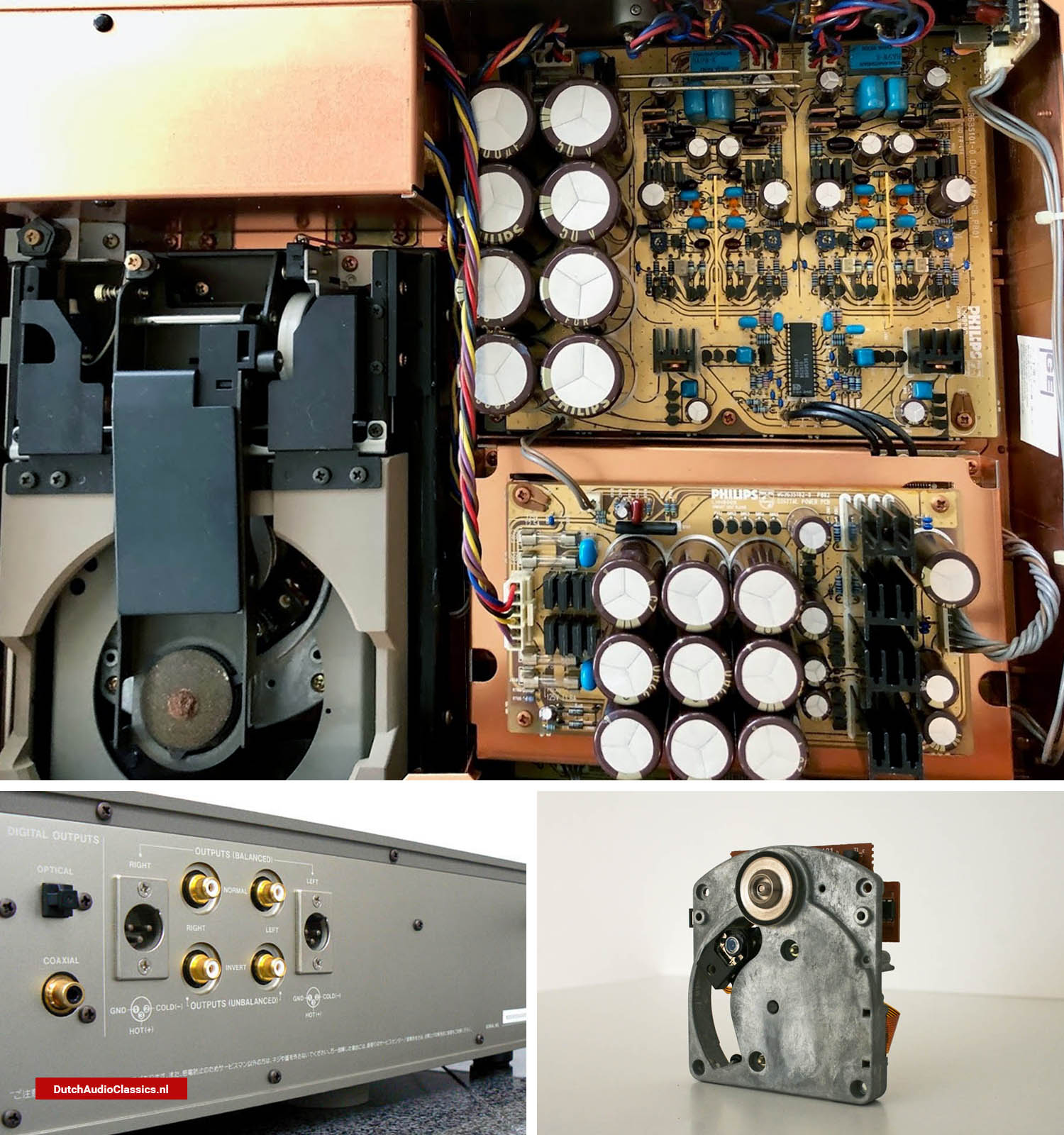
Technically, it aligned fully with the DAC7 direction. The TDA1547 and TDA1307 formed its digital core. In that sense, it affirmed Philips’ commitment to 1-bit conversion. Mechanically, however, it looked back.
The CDM-4/36 Swing-Arm transport was retained. At a time when the industry was simplifying mechanisms, this decision signaled continuity. The LHH900R stands at the intersection of eras: digitally forward-looking, mechanically rooted in the 1980s.
It represents both a culmination and a farewell.
The Technical Core: Controlled Digital, Expressive Analog
In the LHH900R, the TDA1547 was implemented in a single differential configuration, reflecting a deliberate move toward a simplified and more direct signal path.
The analog output stage is particularly revealing. Rather than relying on standard integrated op-amps, the team designed discrete stages without global negative feedback.
Here the Japanese interpretation becomes clear.
The digital section remained compact and efficient. The analog section, by contrast, was elaborate and carefully constructed. Component selection, power supply design, and layout received exceptional attention.
The result was a player that followed Philips’ industrial 1-bit strategy while surrounding it with a distinctly expressive analog execution.
The Engineers Behind the Machines
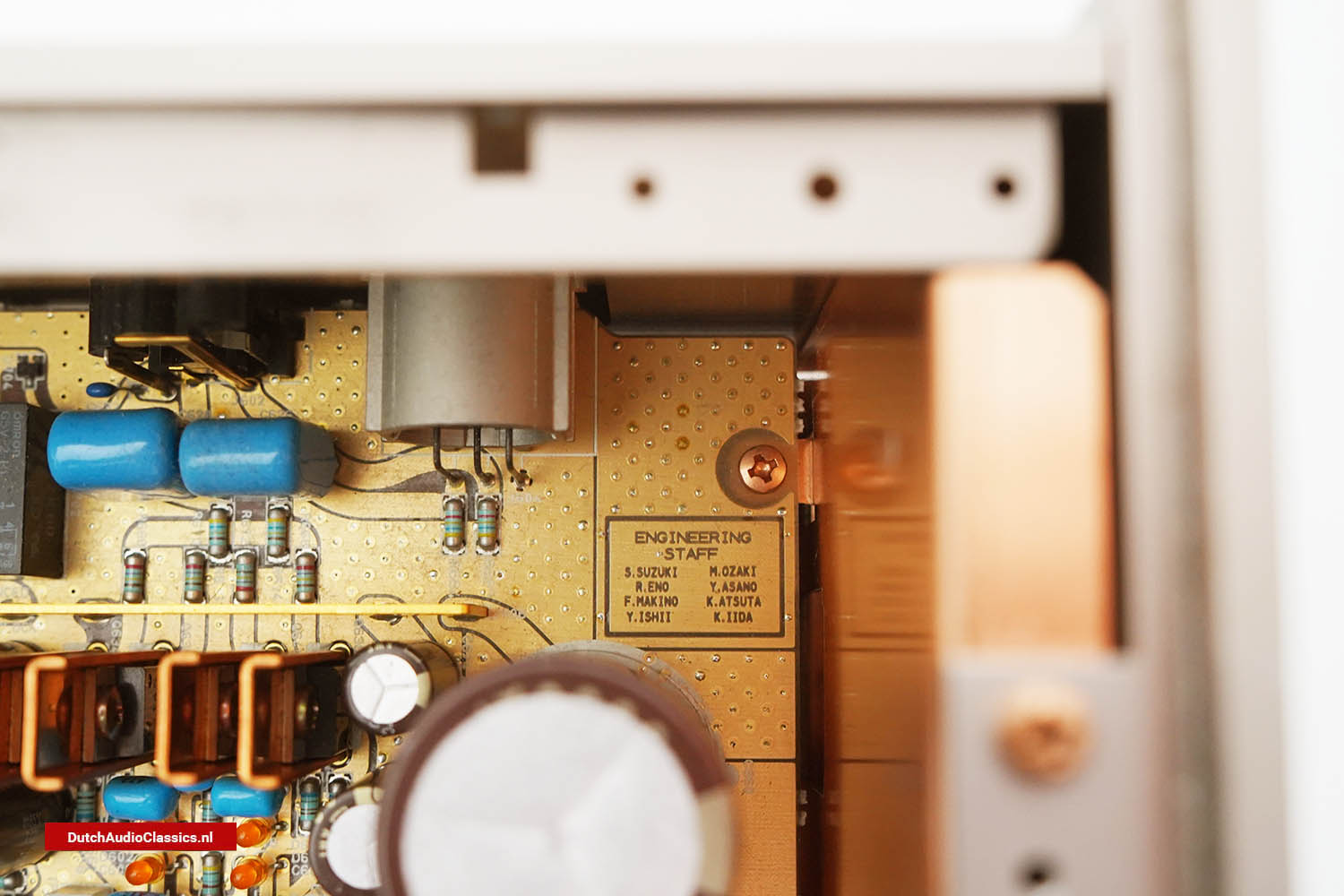
The LHH900R was not an anonymous corporate project. The engineers were so proud of their work that their names were inscribed on the printed circuit boards.
The core team consisted of:
- T. Ozawa
- T. Suzuki
- H. Miyamoto
- K. Atsuta
- A. Shinozaki
- M. Hanzawa
- K. Iida
- Y. Ishii
- F. Makimo
- R. Emo
- M. Ozaki
- Y. Asamo
- H. Kato
 The names of the engineering team behind the Marantz Project D-1, as inscribed on the PCB.
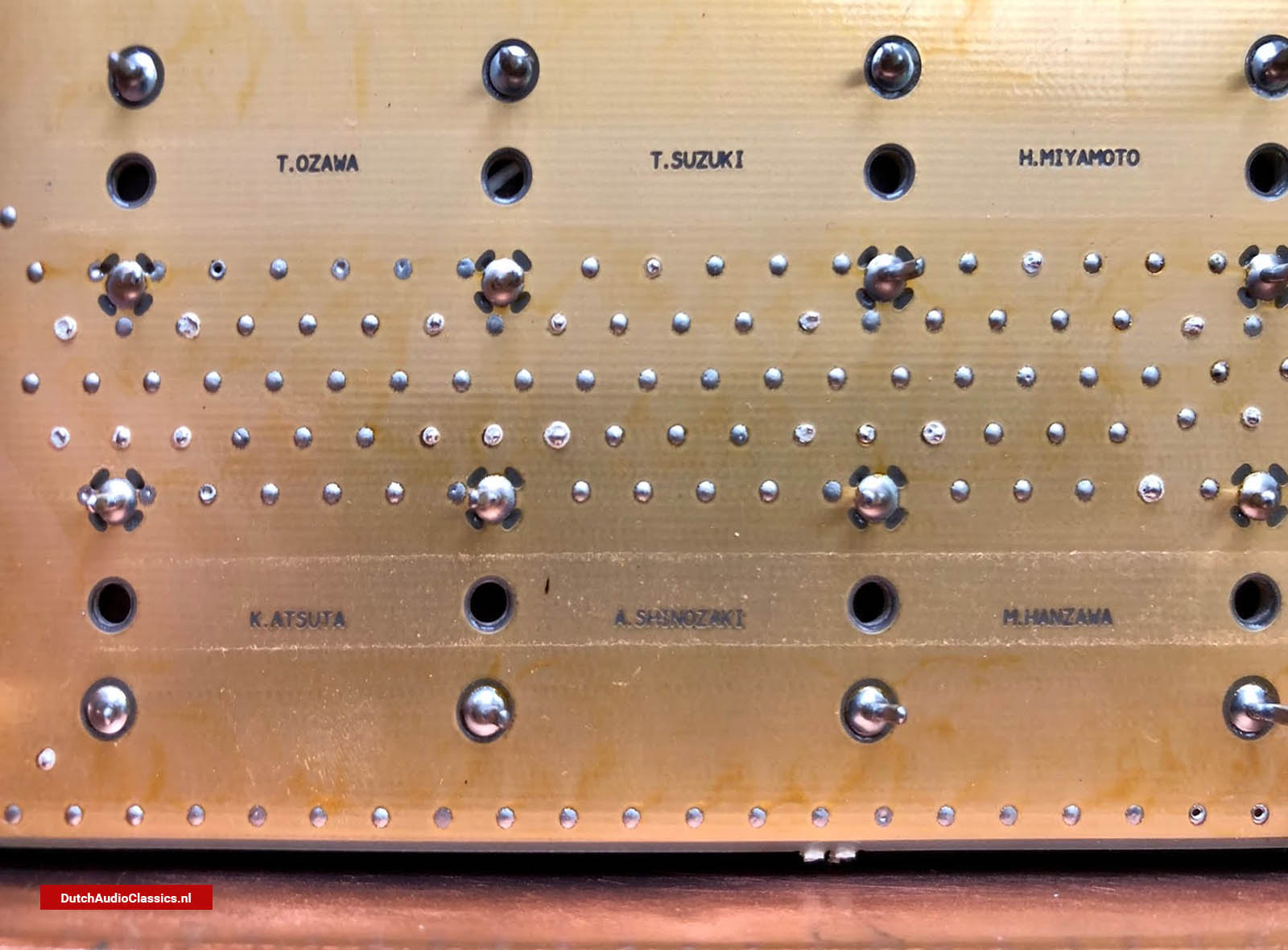 The names of the engineering team behind the Philips LHH900R, as inscribed on the PCB.
This exact team later developed the Marantz Project D-1. These were not separate initiatives, but the work of a close-knit engineering group operating within Philips and Marantz Japan.
Tetsu Suzuki would later become a key figure in the high-end community. He founded the brand Fundamental and became widely respected for his expertise in maintaining and modifying these machines. His later work reflects the same design philosophy that shaped the LHH900R and D-1.
Hideki Kato played a crucial role behind the scenes. He is regarded as the driving force behind the Non-NFB approach. Kato believed that negative feedback could make sound hard or cold. In both the LHH900R and especially the D-1, global feedback was deliberately avoided. Today he continues this philosophy as chief designer at SoulNote.
Management guidance was equally important. Yoshiyuki Tanaka oversaw CD development at Marantz Japan from the 1980s until 2002. He emphasized that the goal was not to achieve better specifications on paper, but to develop products with greater care and sonic balance.
Takashi Sato, initially a technician and later director of Marantz Japan, played a key role in positioning the LHH series as a high-end line within the Japanese market.
The LHH900R and the D-1 were therefore Japanese projects within the Philips group. They were created by a specialized team that was granted unusual freedom to build cost-no-object components, building on Philips’ technical foundations while expressing a distinct Japanese circuit philosophy.
The Marantz Project D-1 as Counterpoint
In 1998, the Project D-1 appeared under the Marantz name, yet it was developed by the same Sagamihara team.
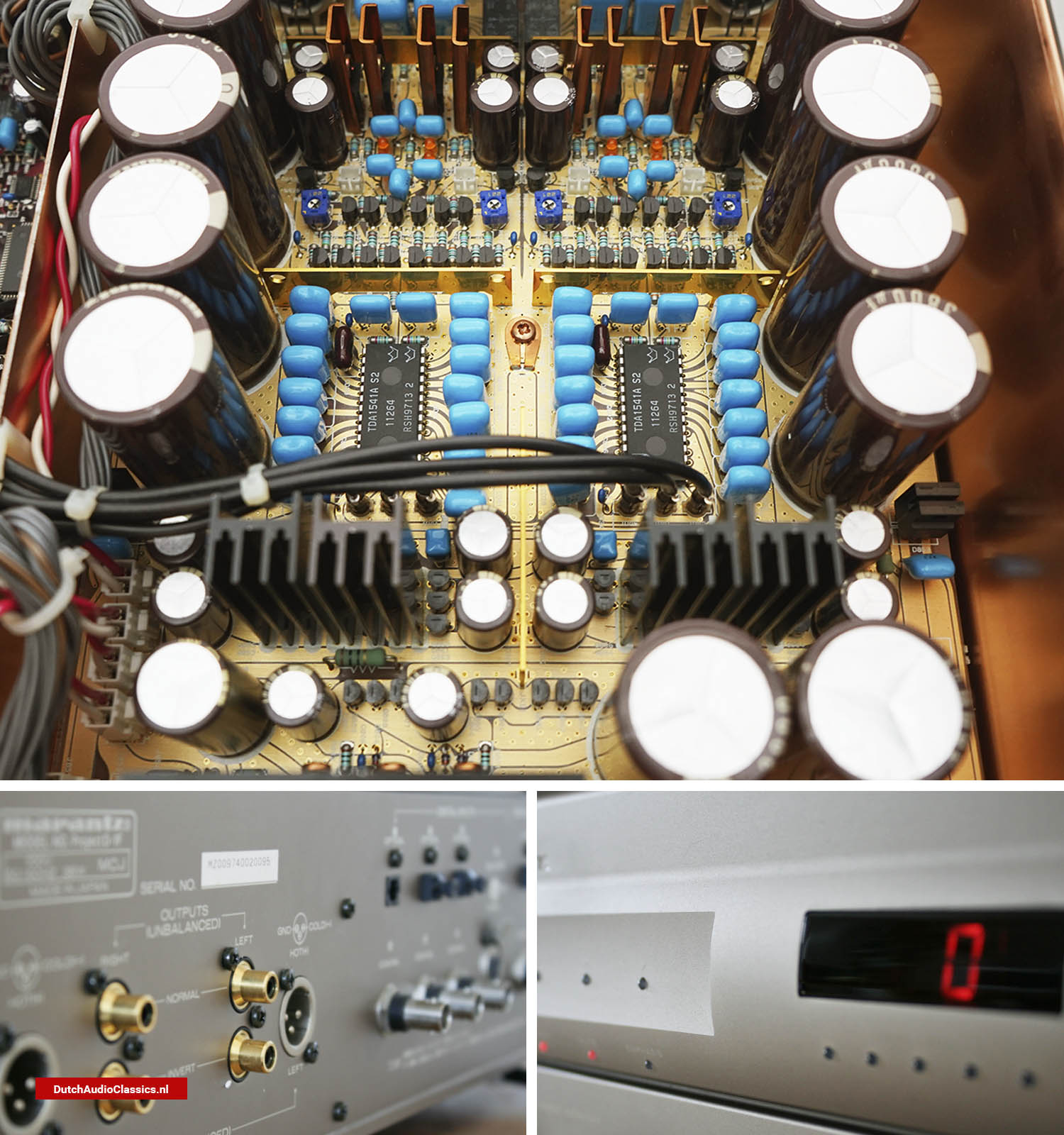
Where the LHH900R embraced 1-bit DAC7, the D-1 employed two TDA1541A S2 multibit DACs in dual mono configuration. This was a striking choice at a time when multibit production was declining.
Yet the D-1 was not nostalgic.
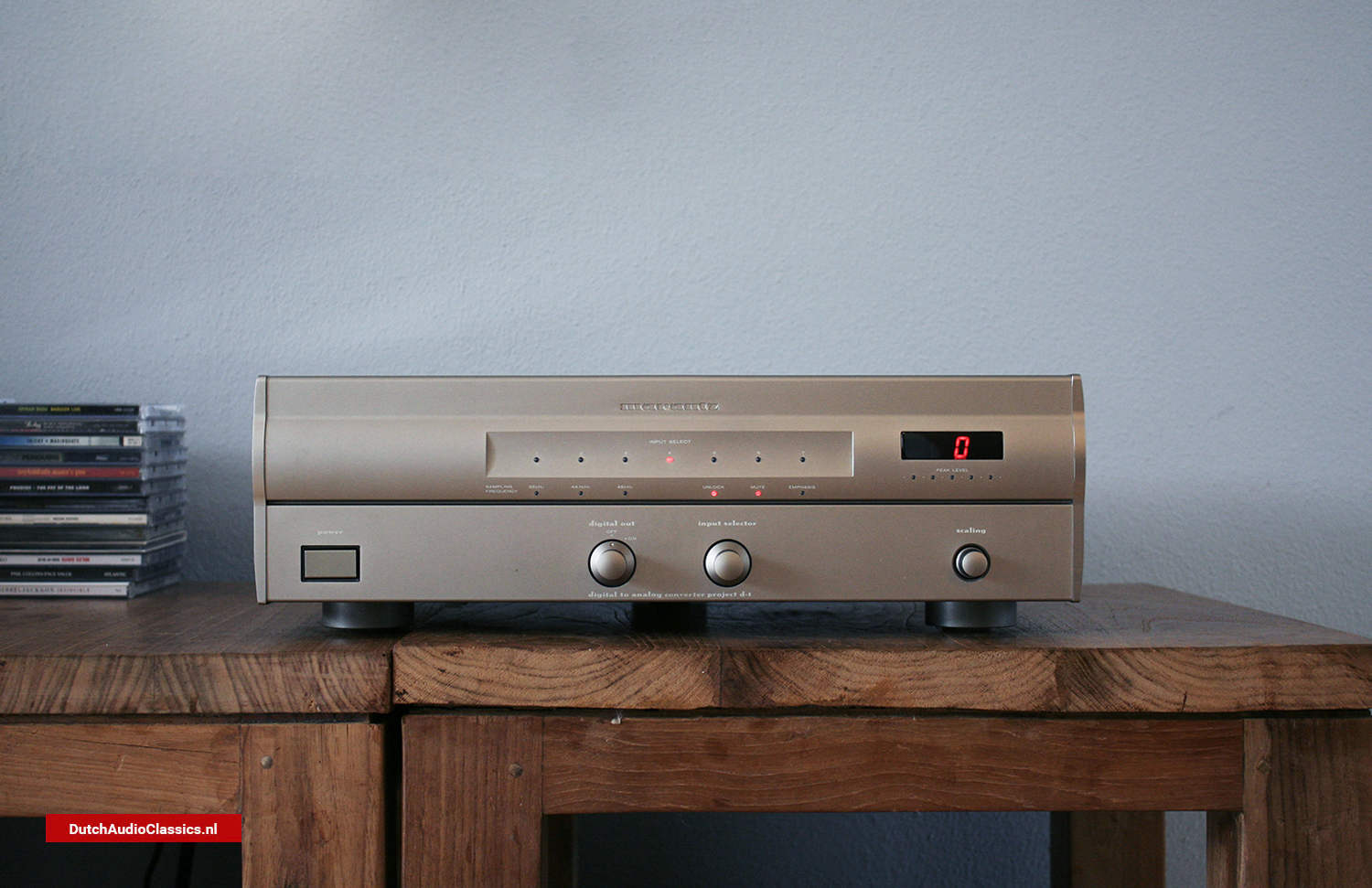
The standard SAA7220 digital filter was replaced by a proprietary DSP solution. The digital processing stage was modernized, while the multibit core was preserved.
Non-NFB principles were applied consistently. The analog stage was fully discrete. The power supply was heavily engineered. Everything was designed for control without global feedback.
Ken Ishiwata later carried elements of this technology into European Marantz models. The DSP concepts and the use of selected S2 chips influenced the development of the Marantz CD-7.
The D-1 demonstrates that the team was not looking backward. It represents a synthesis: an 1980s DAC architecture combined with 1990s digital refinement.
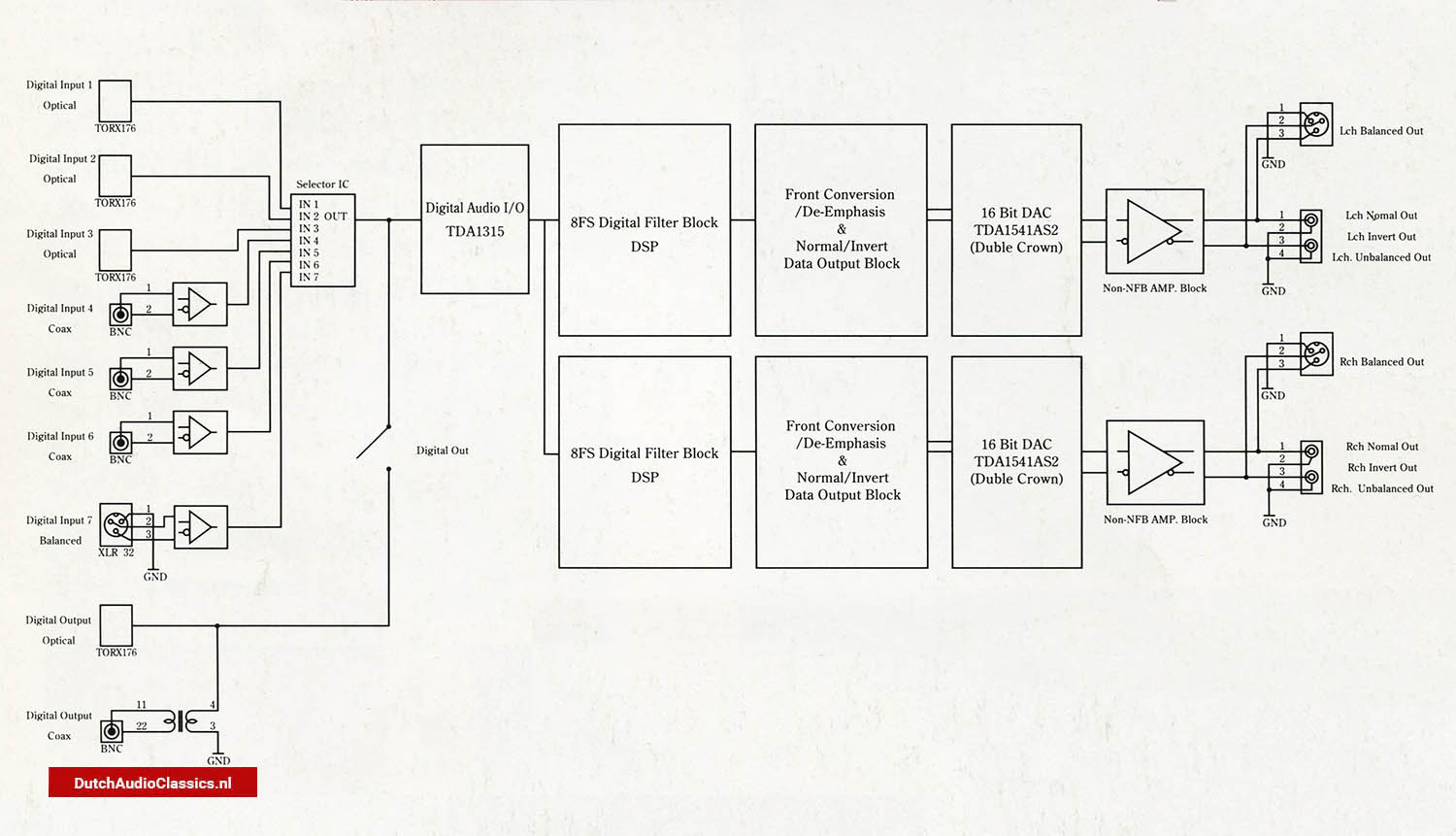 Audio signal path block diagram of the Marantz Project D-1
Two Monuments Within One Organization
It is remarkable that these two seemingly opposed machines were designed by the same engineers.
The LHH900R affirms Philips’ 1-bit strategy and shows how that technology could be executed at the highest level.
The D-1 defends multibit linearity as a sonic ideal, yet does so using contemporary digital tools.
Both components were produced in limited numbers and carried very high price tags. They did not interfere with Philips’ broader production strategy, which allowed room within the corporation for a controlled form of diversity.
They function as mirror monuments. One confirms the industrial future. The other preserves an alternative vision within the same ecosystem.
A Quiet Conclusion
After 1998, high-end CD development changed tone. Fundamental architectural debates faded. One-bit designs dominated mass production. Swing-Arm transports disappeared. Multibit DAC chips were no longer manufactured at scale.
Improvements became incremental. Better clock stability. More refined power supplies. More careful component selection.
The LHH900R and the D-1 therefore mark the end of a period in which digital architecture itself was still debated within Philips.
They are more than products. They are tangible records of an internal search for balance between industrial logic and engineering conviction. After them, digital audio became less ideological and more evolutionary.
In that sense, they quietly close a formative chapter in the history of the Compact Disc. A chapter in which technology, culture, and personal belief were still visibly intertwined within a single machine.
This blog explores the historical significance of the Philips LHH900R (1996) and the Marantz Project D-1 (1998) within the transition from multibit to 1-bit DAC technology. It explains how the LHH900R embodied Philips’ DAC7 Bitstream strategy while retaining the classic Swing-Arm transport, and how the D-1, developed by the same Sagamihara team, reintroduced dual multibit TDA1541A S2 DACs with a custom DSP. By highlighting the engineers behind both machines, the article positions them as symbolic closing statements in the architectural debate that shaped the final formative era of high-end CD design.